Soft doesn't mean unsupportive#
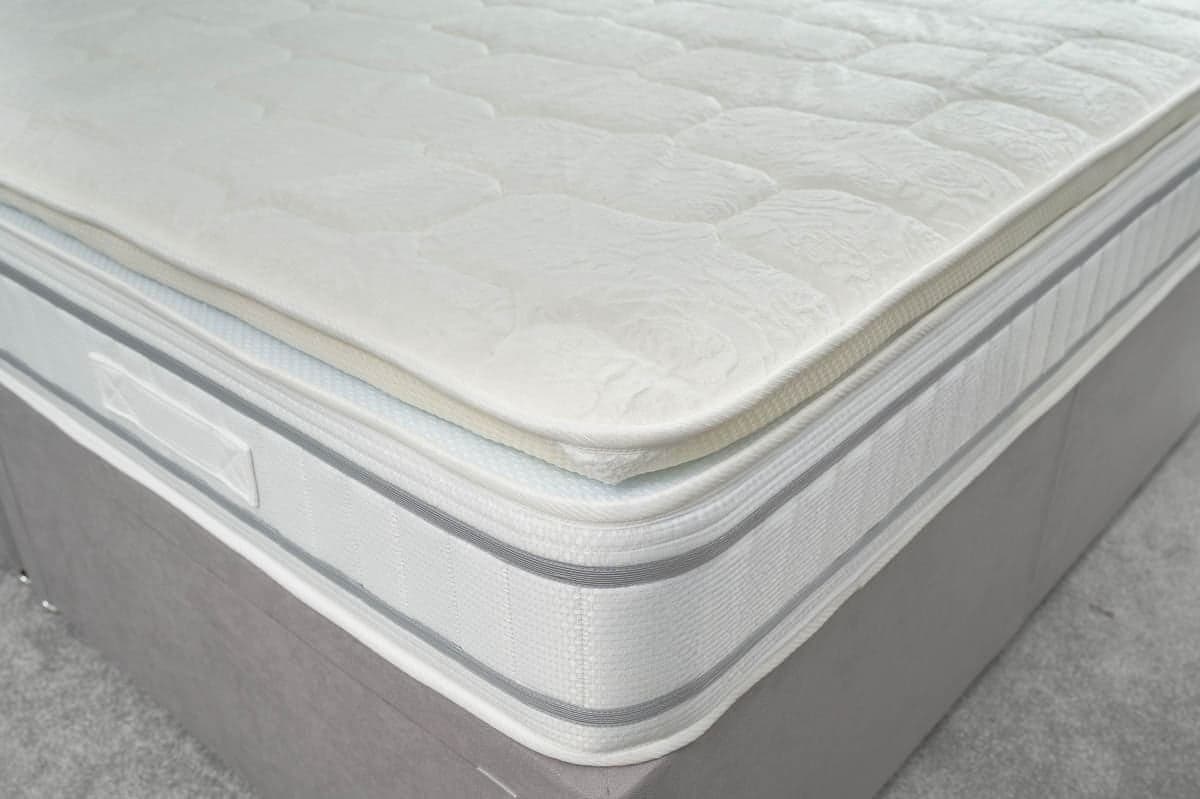
A common worry is that a soft mattress is bad for your back. It can be, if it sags, but a well-built soft mattress cushions your pressure points while a firm core underneath still holds your spine in line. The goal isn't softness for its own sake; it's the right amount of give so your shoulders and hips sink enough to keep the spine neutral.
Who genuinely benefits from a soft mattress?#
- Side sleepers: the biggest winners, the shoulder and hip need to sink in so the spine stays straight, which a softer surface allows.
- Lighter people: less body weight means you don't compress a firmer mattress enough to get pressure relief, so a softer feel contours better.
- Those with shoulder or hip pain: extra cushioning at the joints reduces the pressure that causes morning soreness.
- Anyone who simply finds firm beds uncomfortable: comfort is individual and a valid reason to choose softer.
Who should be cautious with soft?#
Heavier sleepers, back and front sleepers, and most people with low back pain usually do better nearer medium-firm. The evidence is clear that medium-firm best supports comfort, sleep quality and spinal alignment for the general population,1 so very soft is a targeted choice, not a default. If you sink so far that your hips drop below your shoulders, the mattress is too soft for you.
How to choose a soft mattress that still supports you#
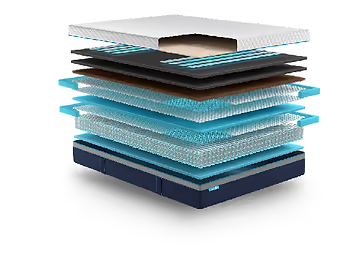
- Look for a supportive core under the plush top: a soft comfort layer over firm pocket springs or high-density foam gives cushioning without sagging.
- Consider a hybrid: springs keep the spine supported while a generous comfort layer delivers the soft feel.
- Mind the temperature: deep, soft foam can sleep warm because you sink in, see our cooling guide if you run hot.
- Use a home trial: softness that feels lovely for five minutes can lack support over a full night, give it weeks.
Don't overlook sleep quality#
Firmness shapes sleep itself, and research links medium firmness to shorter sleep latency and more stable sleep architecture than a soft surface.2 The lesson isn't "never go soft", it's to choose the softest feel that still keeps you well aligned, since fit ultimately depends on the interaction between sleeper and surface.3
Browse soft and medium-soft mattresses, compare in our firm vs soft guide, or take our quiz for a personalised firmness match.
The best soft mattresses we have scored#
Soft mattresses are a smaller category than firm ones in the UK, and a lot of what is sold as "soft" is a medium with a plush cover. These are the models in our catalogue rated soft or medium-soft, ranked by score. The live ranked list is on our best soft mattress page.
| Mattress | Best for | Firmness | Type | Comfort score | Price (double) |
|---|---|---|---|---|---|
| Luxe Nova Hybrid | Best soft mattress overall / side sleepers | Medium-soft | Hybrid | 10.0 | £449 (RRP £599) |
| Tempure Velure Pillow-Top | Best plush foam | Medium-soft | Foam | 8.6 | £449 |
| Tencel 1000 | Best soft pocket sprung / hot sleepers | Soft | Pocket sprung | 8.3 | £339 (RRP £399) |
| Reverso Memory | Best budget soft | Soft | Foam | 8.2 | £329 |
| Emma Original | If soft turns out too soft | Medium | Foam | 8.9 | £469 |
Prices are for a double at the time of writing (September 2026), using the sale price where the brand runs a permanent one. Live prices and full scores are on each review page. We may earn a commission if you buy through our links, at no extra cost to you; it never affects a score.
Best soft mattress overall: Luxe Nova Hybrid#
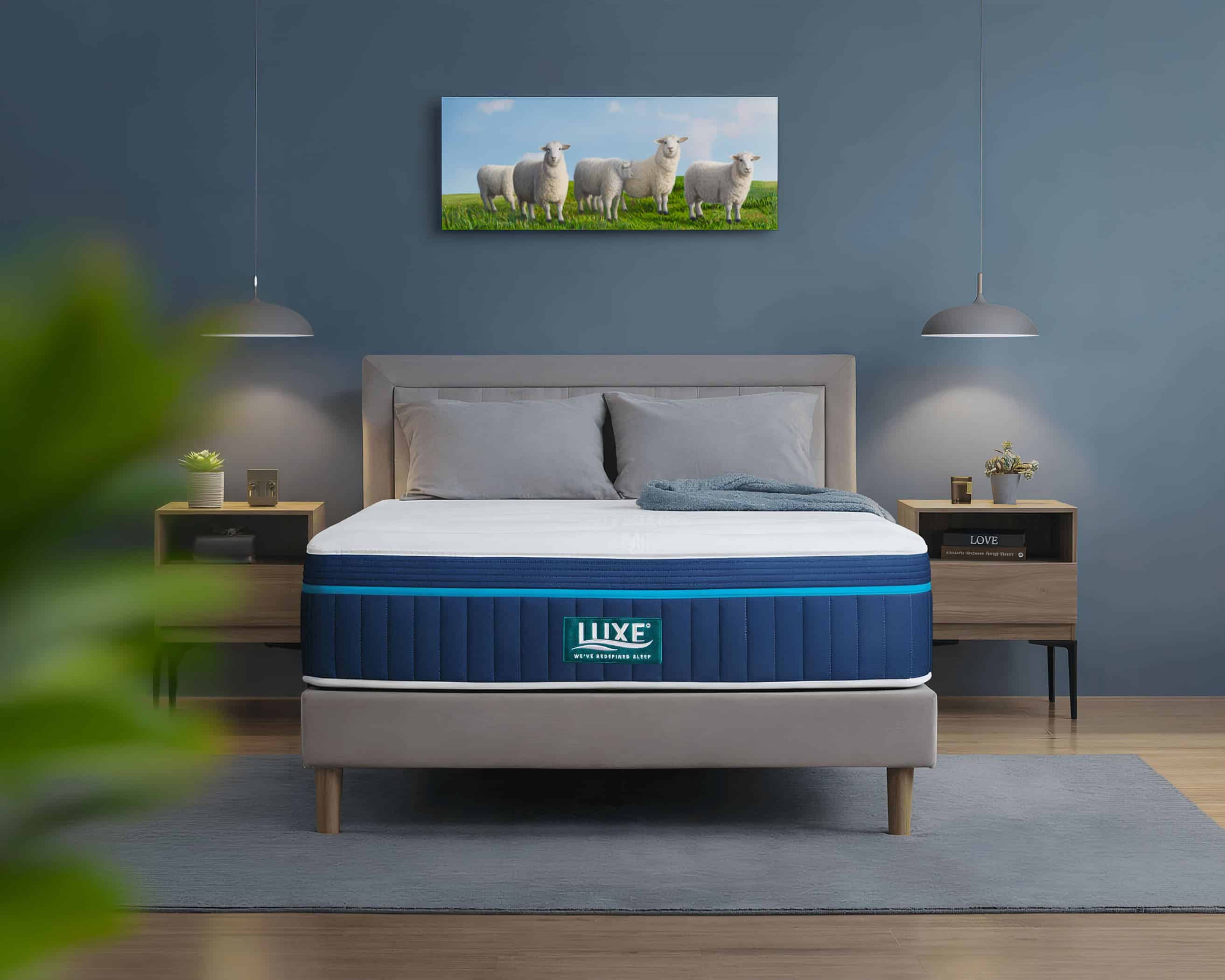
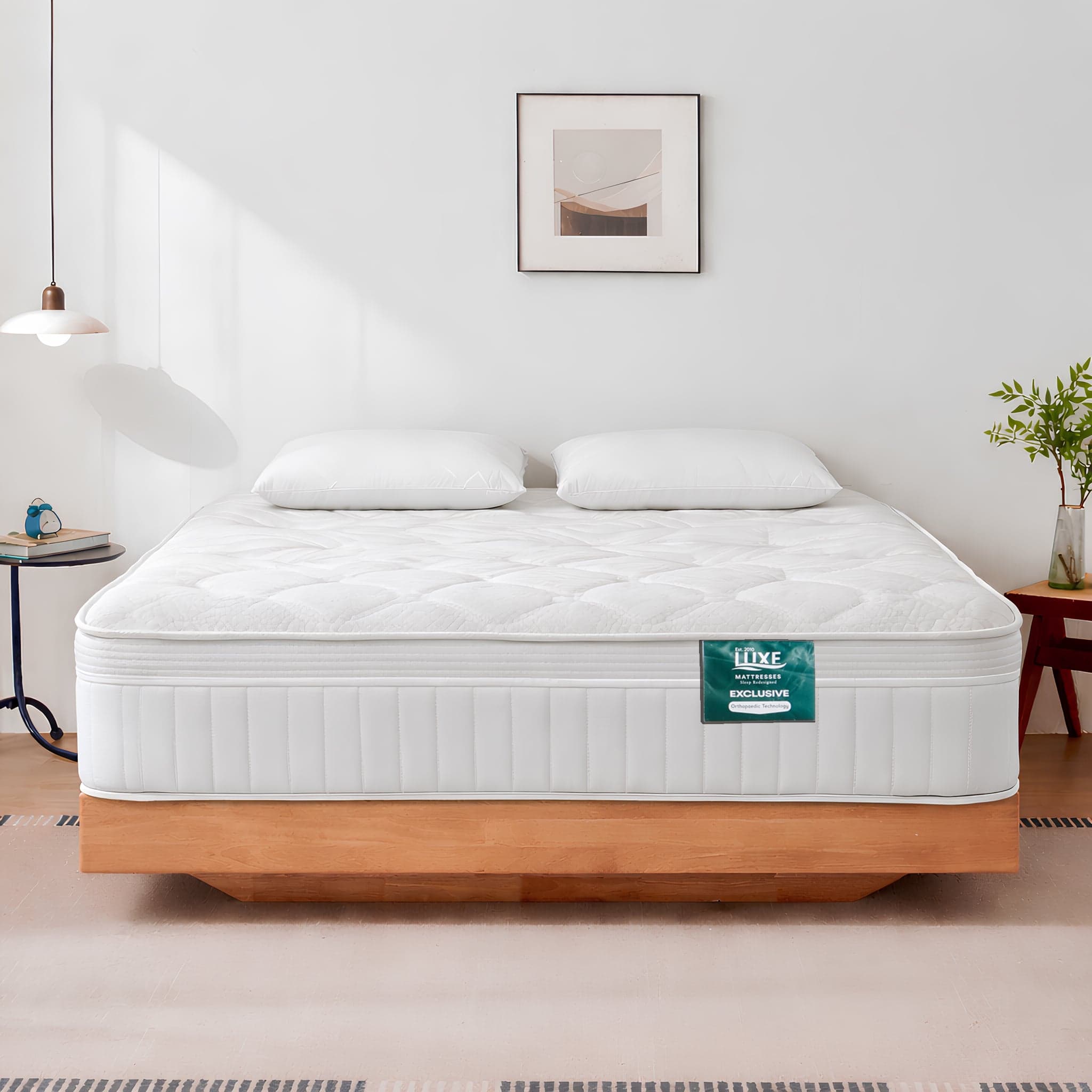
The Nova is the clearest example of "soft on top, supported underneath" in our catalogue. Gel-infused memory foam and wool-and-silk fillings sit over a zoned pocket-spring unit, so the shoulder and hip sink while the springs hold the middle. It has the only perfect 10 comfort score on the site. The support score of 7.0 is the honest counterpart: this is a side-sleeper mattress, not a front-sleeper one.
Best plush foam: Tempure Velure Pillow-Top#
If you want the enveloping feel of memory foam with an extra layer of give, the Tempure Velure adds a velour pillow-top over a memory-foam and base-foam build. It is the softer-feeling of the two Luxe foam options here and suits lighter side sleepers who found ordinary memory foam too firm.
Best soft pocket sprung: Tencel 1000#
Soft and cool rarely go together, because soft usually means deep foam. The Tencel 1000 gets round it with a soft comfort foam over 1,000 pocket springs and a Tencel cover, so it has the give of a soft mattress with the airflow of a sprung one. The pick for a soft-sleeping hot sleeper.
Best budget soft: Reverso Memory#
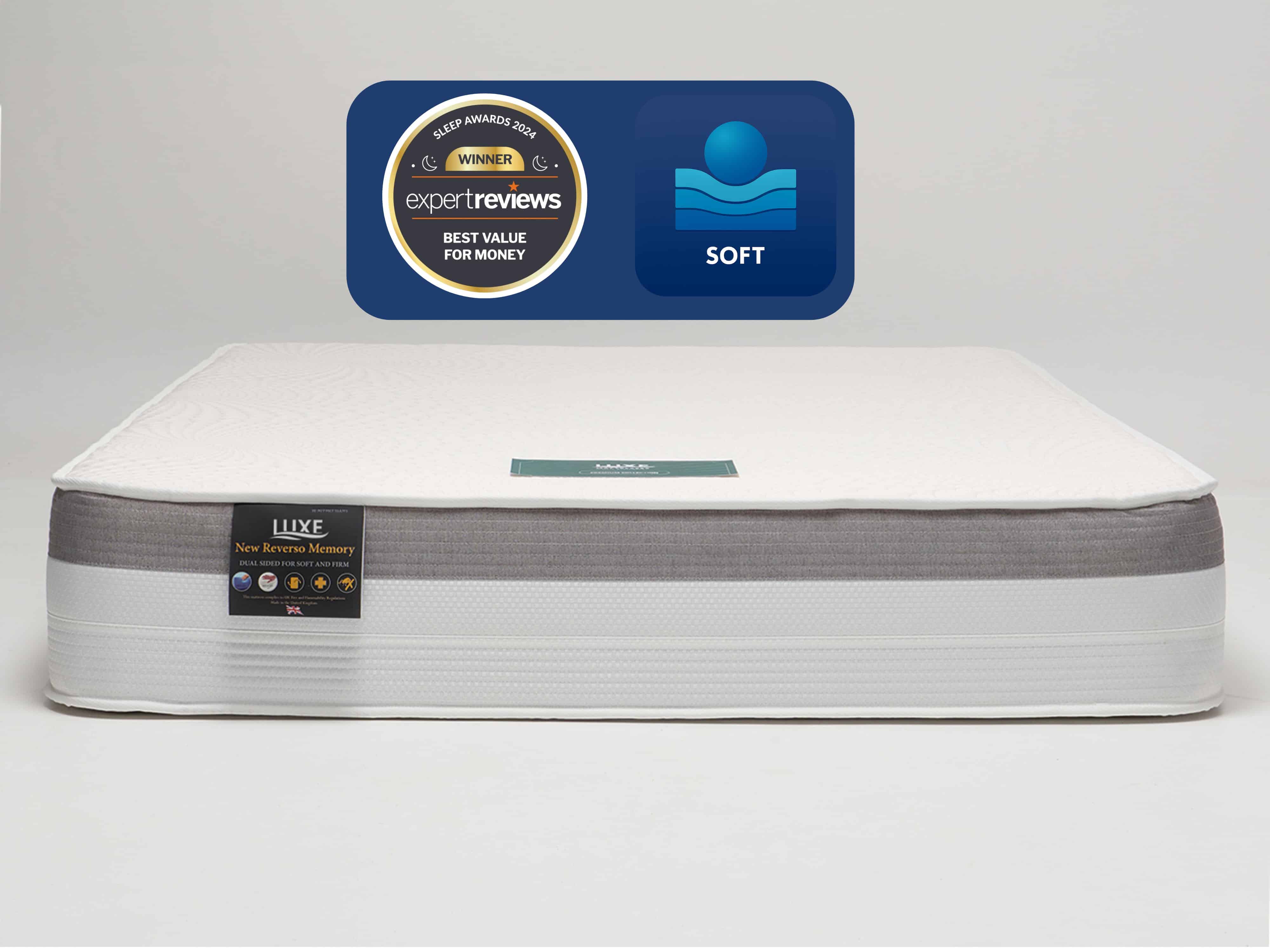
The Reverso is the cheapest genuinely soft mattress we list that still comes with a 100-night trial and 10-year warranty. It is 25cm of memory foam over a supportive base and does the job for lighter sleepers and children's or guest beds without the price of a hybrid.
Soft, medium-soft and "plush": reading the labels#
Because there is no UK standard, the label tells you where a brand places the mattress in its own range, not how it compares to another brand's. A few rules of thumb:
- Soft from a spring-mattress maker usually means a soft comfort layer over a normal spring unit; the mattress still holds its shape. Soft from a foam maker often means a lower-density top foam that you sink into further.
- Medium-soft is the most useful label in the category. It is soft enough for most side sleepers and lighter people, without the sag risk of a true soft.
- "Plush" and "pillow-top" describe the surface, not the support. A pillow-top mattress can have a firm core underneath. They are about the first few seconds of lying down.
The hip-drop test#
The single most useful check for whether a soft mattress is too soft for you: lie on your side, as you normally sleep, and have someone look at your spine from behind (or photograph it). It should be a roughly straight line from neck to tailbone. If your hip has dropped so the line dips in the middle, the support core is not holding you and the mattress is too soft, however lovely it feels. If your shoulder is pushed up so the line bends the other way, it is too firm. Give the mattress two to three weeks to fully expand and for your body to adjust before drawing conclusions, then do the check.
Soft mattresses and back pain#
The general evidence favours medium-firm for back pain,1 but that is a population finding, not a rule for every back. Side sleepers with pain at the shoulder or hip, rather than the lower back, often improve on a softer surface because the pressure at those joints drops. Lower-back pain, especially in back or front sleepers, is the case where soft is most likely to make things worse, because the hips sink and the lumbar curve over-extends. If you have back pain and want soft, a medium-soft hybrid with a proper spring core is a much safer bet than a soft all-foam mattress. Our best mattress for back pain list explains which models we would start with.
References#
- Caggiari G, Talesa GR, Toro G, Jannelli E, Monteleone G, Puddu L. What type of mattress should be chosen to avoid back pain and improve sleep quality? Review of the literature. Journal of Orthopaedics and Traumatology. 2021;22:51. doi:10.1186/s10195-021-00616-5
- Hu Z, Wang Y, Li L, et al. Effects of Mattress Firmness on Sleep Quality and Sleep Architecture. Nature and Science of Sleep. 2025;17:865–878. doi:10.2147/NSS.S503222
- Robbins R, Quan SF, Barger LK, et al. Validation of the Boston Mattress Satisfaction Questionnaire. Frontiers in Sleep. 2025;4:1509420. doi:10.3389/frsle.2025.1509420
- Vlaović Z, Klarić N, Domljan D. Investigating the Impact of Long-Term Use on Mattress Firmness and Sleep Quality: Preliminary Results. Applied Sciences. 2024;14(21):10016. doi:10.3390/app142110016