

How pocket springs work#
A pocket sprung mattress is built on hundreds or thousands of small steel coils, each sewn into its own fabric pocket. Because the pockets are not wired together, each spring compresses on its own: the spring under your shoulder can give while the one under your waist pushes back. That is the whole advantage over the older open-coil design, where the springs are linked and the mattress moves as one sheet, dipping towards the heavier sleeper and passing every movement across the bed.
Pocket springs also leave a lot of air inside the mattress, which is why sprung mattresses sleep cooler than solid foam, and steel recovers its shape better than foam does, which is why a good one lasts.
Spring counts: what the number really tells you#
Spring counts are the most over-marketed figure in the mattress shop. A higher number can mean better contouring, but only if you compare like with like, because brands count differently:
- Full-size springs do the supporting. A double typically has around 1,000 to 2,000.
- Micro springs are much smaller springs in a second layer near the surface, used instead of a foam comfort layer. They add cushioning, and they add a lot to the headline count.
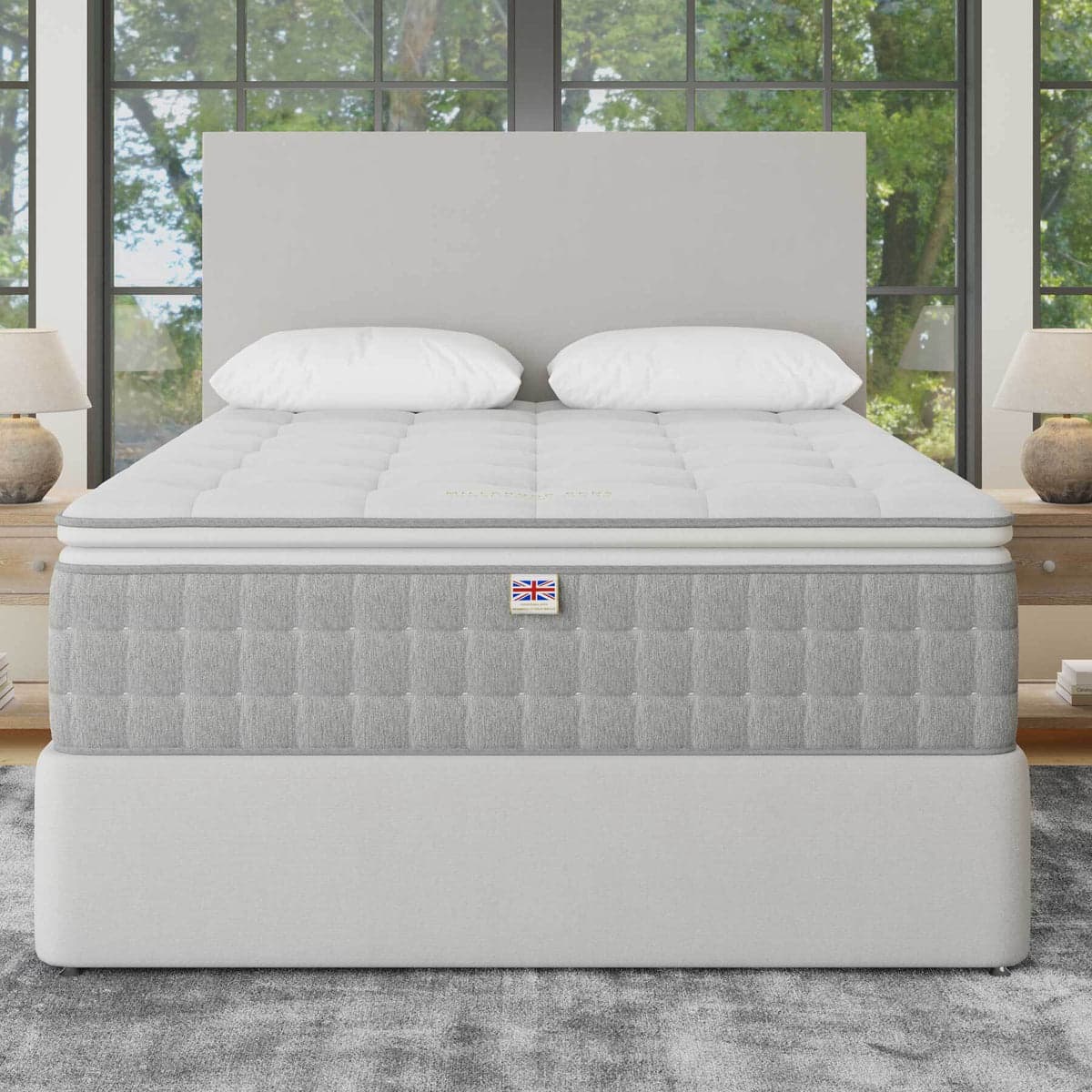
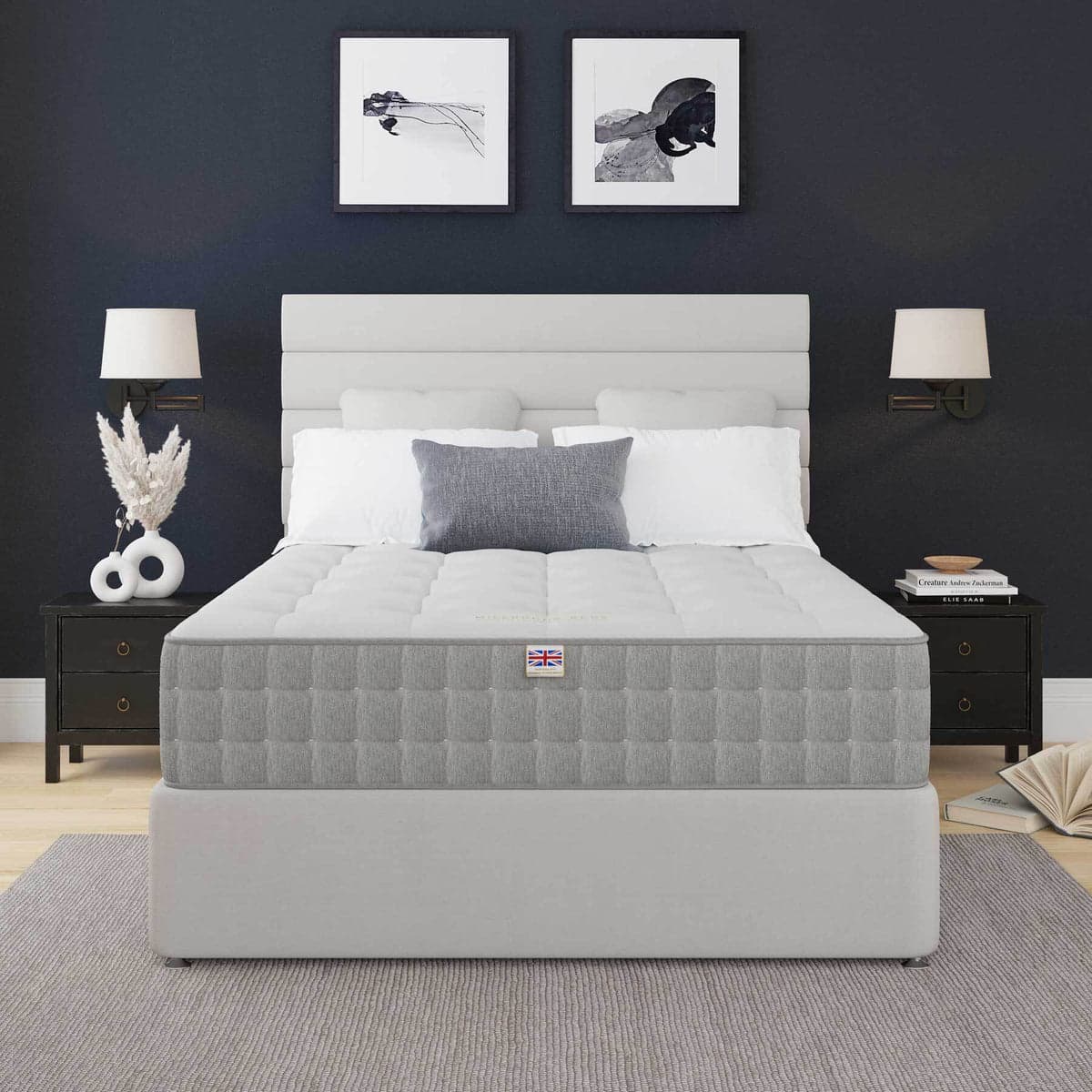
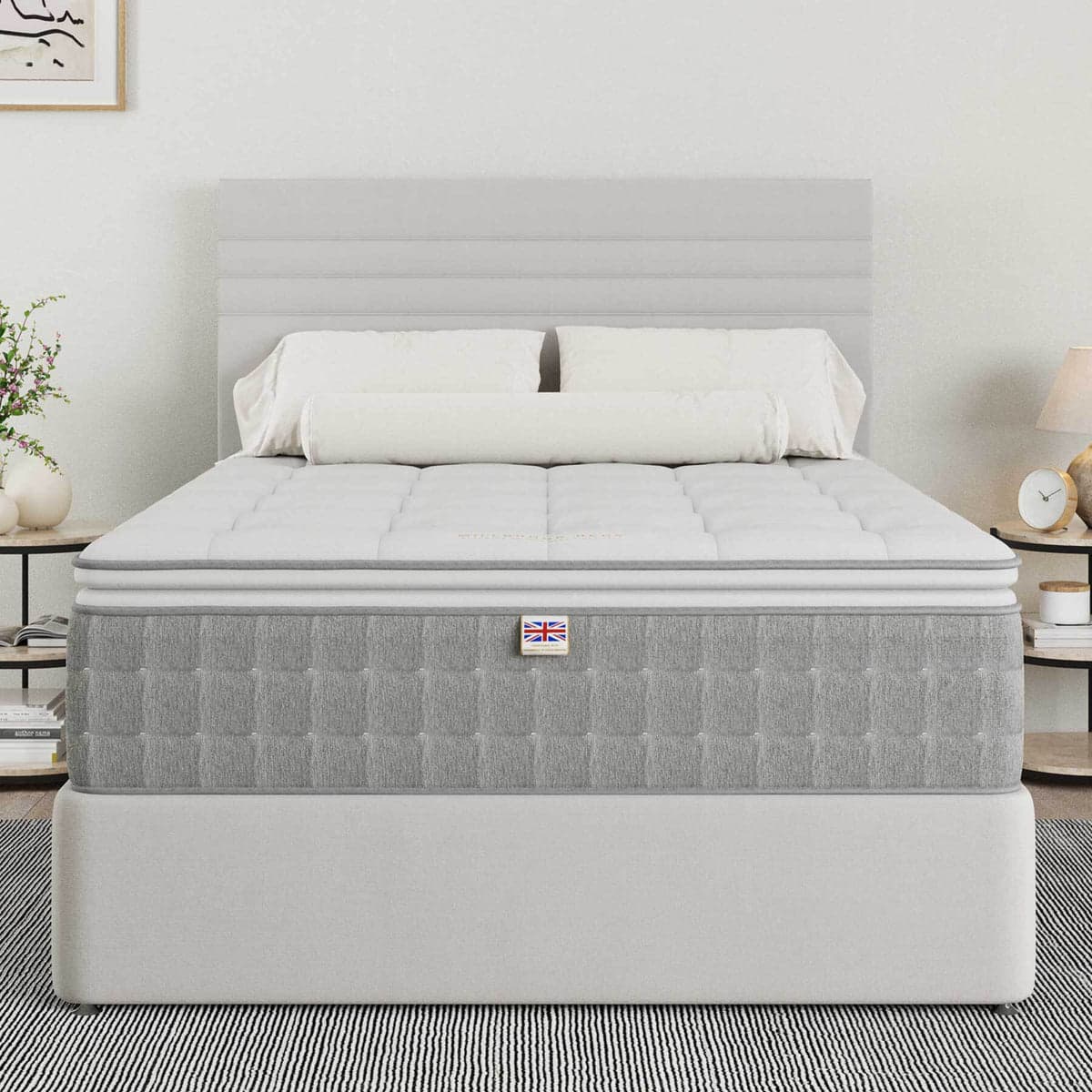
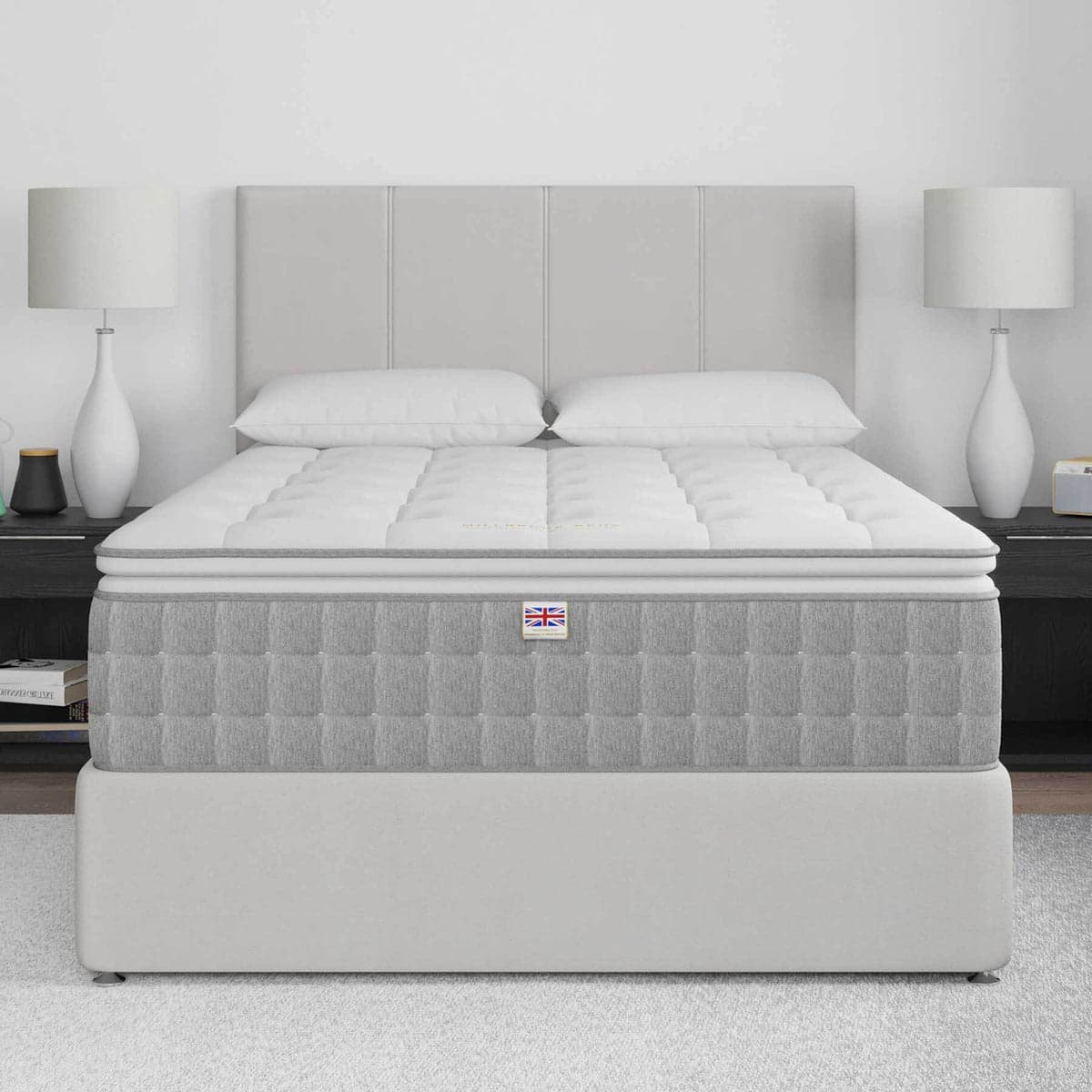
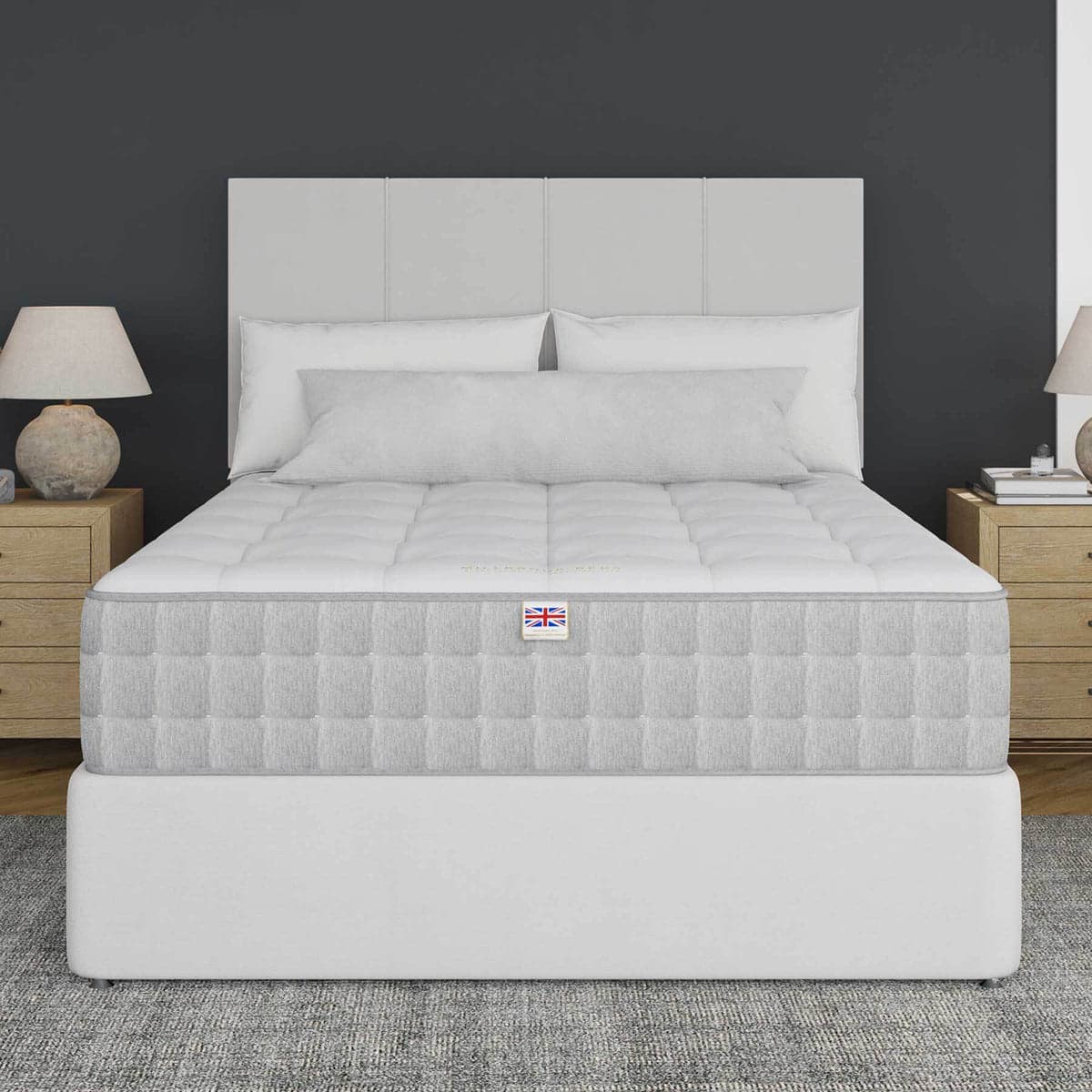
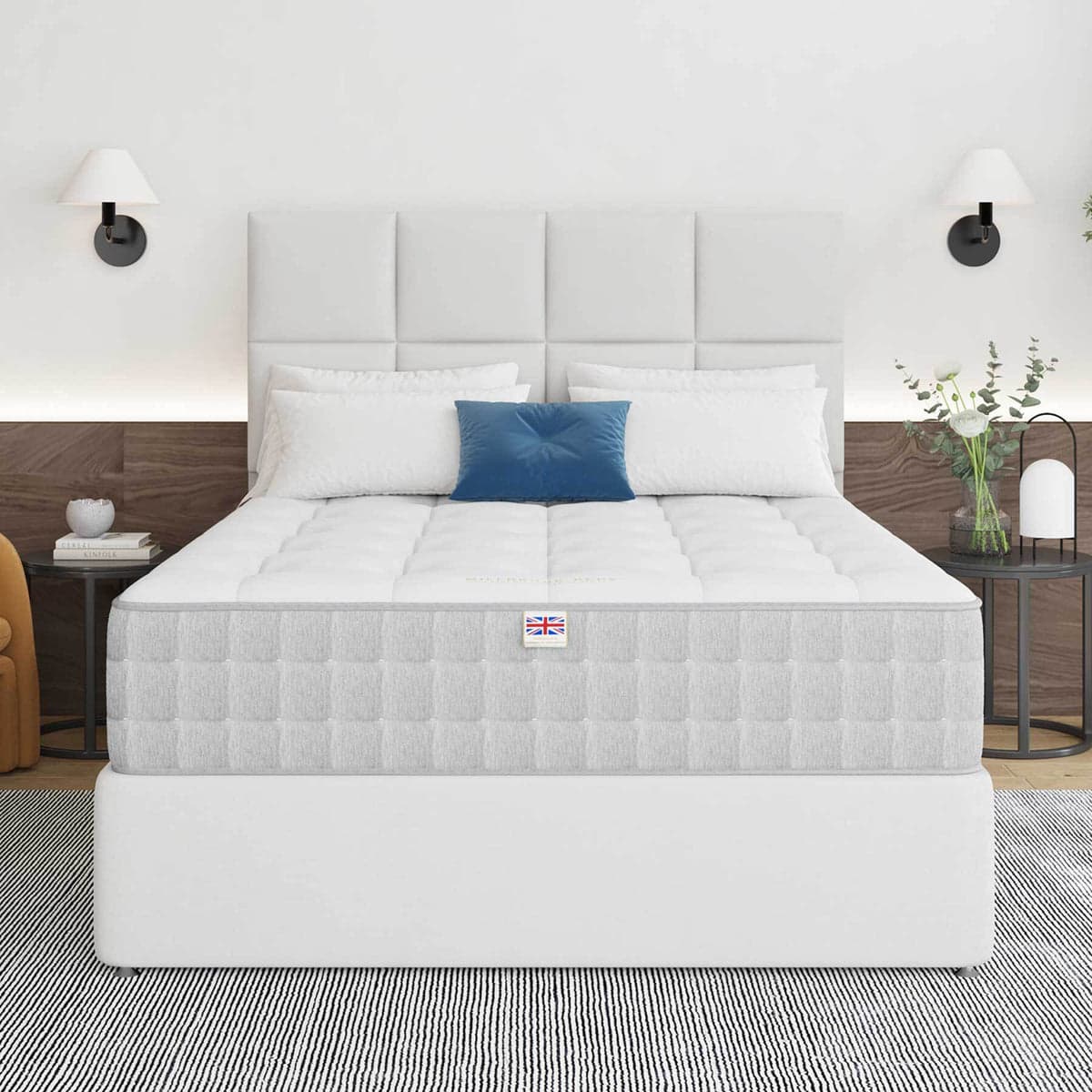
Millbrook's Serenity range shows the difference. The Serenity 1020 has 1,020 full-size springs and nothing else. The Serenity 4500 has 1,000 full-size springs plus 3,500 micro springs. The support unit is almost the same; what the extra 3,500 buy you is a softer, more contouring surface. So ask how many of the springs are full-size, and treat the rest as part of the comfort layer.
Tension and gauge#
Many traditional makers sell the same mattress in more than one tension. The tension changes the spring wire (its gauge), not the fillings, so a firm-tension mattress pushes back harder while the surface feels much the same. As a rule:
- Medium suits most side and combination sleepers, and anyone of average weight.
- Firm suits back and front sleepers, heavier sleepers, and anyone replacing a mattress that felt too soft.
Our firmness by weight chart goes into more detail.
Natural fillings or foam on top?#
What sits above the springs decides how the mattress feels. There are two schools:
- Natural fillings (wool, cotton, silk, cashgora, horsehair): buoyant and breathable, the coolest-sleeping option, and the traditional British build. They settle a little over the first months, which is normal. Examples: the Imperial 2000 and the whole Millbrook Serenity range.
- Foam or latex comfort layers: more contouring and better at absorbing a partner's movement. Once the foam layer is substantial the mattress is usually sold as a hybrid; see our best hybrid mattresses.
One-sided or double-sided?#
Most modern pocket sprung mattresses are one-sided ("non-turn"): rotate them head to foot every few months, but do not flip them. Traditional double-sided mattresses can be flipped as well, which spreads the wear and is one reason the best of them last 15 years or more. Double-sided is better for longevity; one-sided is easier to live with.
Zoning and edges#
Zoned spring units use softer springs under the shoulders and hips and firmer ones under the lower back, which helps keep the spine level for side sleepers. Edge support matters if you sit on the side of the bed or share it: look for a reinforced perimeter or hand side-stitching, which stops the edge collapsing when you sit on it.
What to spend#
| Budget (double) | What you get | Examples we have tested |
|---|---|---|
| Under £500 | A single spring layer with a foam or fibre top. Good support; simpler fillings. | Tencel 1000, Pocket Reflex 1000, Imperial 2000 |
| £650 to £1,000 | Handmade construction, natural fillings, micro-spring comfort layers. | Millbrook Serenity 1020, 2500, 4500 |
| Over £1,000 | Deeper builds, richer fills, the finest-grained spring layers. | Millbrook Serenity Luxury 6500 |
Prices are for a double at the time of writing (October 2026), using the sale price where one applies. Live prices and full scores are on each review page. We may earn a commission if you buy through our links, at no extra cost to you; it never affects a score.
Looking after a pocket sprung mattress#
Rotate it head to foot every three months (and flip it too if it is double-sided). Expect natural fillings to form shallow body impressions in the first months: that is the fibres settling, not a fault, and rotating spreads it evenly. Use a solid or slatted base with gaps of no more than about 7cm, and a breathable protector rather than a plastic one.