This page reviews the published research on mattresses and sleep. It is general information, not medical advice: persistent pain or sleep problems should be assessed by a clinician.
Executive summary
The best-supported conclusion in the mattress literature is not that one material is universally superior, but that a sleep surface should maintain comfortable spinal alignment while distributing pressure without excessive sinking or focal loading. Across systematic reviews and the strongest randomised trial, medium-firm mattresses perform better on average than very firm mattresses for adults with chronic non-specific low-back pain, although individual anatomy, sleeping posture and preference materially change the optimum. In the landmark double-blind multicentre trial of 313 adults with chronic low-back pain, a medium-firm mattress produced better pain and disability outcomes after 90 days than a firm mattress; the odds of improvement in disability were about twice as high. Subsequent systematic reviews have broadly supported medium-firm or individually adjustable surfaces, while emphasising substantial heterogeneity and limited high-quality evidence.
Mattress construction type (spring, foam, latex, hybrid or air) is less clinically important than the resulting mechanical behaviour: effective stiffness, contouring, pressure distribution, resilience and the way those properties interact with a person's mass and posture. Biomechanical reviews explicitly caution that there are no validated universal target values for "perfect" spinal alignment or pressure distribution, and much of the industry language around "orthopaedic", "zoned", "cooling" and "smart" mattresses extends beyond what controlled clinical trials have demonstrated.
For most adults without a specific medical contraindication, a sensible starting point is a medium to medium-firm, non-sagging mattress, followed by individual adjustment according to body size, shoulder/hip prominence, sleeping position and symptoms. Side sleepers generally need enough surface compliance for the shoulder and hip to sink without laterally bending the spine; back sleepers usually tolerate a somewhat firmer support surface; prone sleepers often require enough firmness to limit pelvic sinking, although habitual prone sleeping may place greater stress on the lumbar and cervical regions. These are biomechanically plausible principles, but direct clinical evidence comparing positions remains modest. A 2025 systematic review found only six eligible observational studies and therefore cannot justify prescribing a single sleep position to everyone.
Pillow height matters because the mattress and pillow form a single support system. Laboratory work demonstrates that changing pillow height alters cervical angles and cranio-cervical pressure, but there is no universal pillow height that suits all bodies and mattresses. Side sleepers generally require a pillow thick enough to fill the shoulder-to-head gap; back sleepers generally need less height; stomach sleepers tend to need a thin pillow or, for some people, no head pillow, because greater elevation rotates or extends the neck. These are ergonomic recommendations rather than high-certainty clinical prescriptions.
The quality of sleep is influenced much more broadly than by the mattress. Adults should generally obtain at least seven hours of sleep regularly, and regular sleep timing is independently associated with better health and performance. Chronic insomnia is best treated with structured behavioural and psychological therapy, particularly cognitive behavioural therapy for insomnia (CBT-I), rather than by continually changing mattresses. Persistent loud snoring, witnessed breathing pauses, gasping or excessive daytime sleepiness warrant assessment for obstructive sleep apnoea; formal diagnosis requires appropriate sleep testing rather than a consumer mattress or wearable device.
Methods, evidence base and limitations
This review prioritised systematic reviews, randomised controlled trials, biomechanical experiments, peer-reviewed sleep-medicine research and professional clinical guidelines. Searches focused on mattress firmness, material and construction, spinal alignment, pressure distribution, low-back and neck pain, temperature regulation, pillows, sleep position, adjustable beds, allergens, environmental life-cycle assessment, sleep duration, circadian regularity, insomnia and obstructive sleep apnoea. Major literature syntheses include the controlled-trial review by Radwan and colleagues, the 2019 biomechanical review by Wong and colleagues and the 2021 systematic review by Caggiari and colleagues.
The mattress evidence base is substantially weaker than the literature for treatments such as CBT-I or obstructive sleep apnoea diagnosis. Mattress studies often include small samples, short exposure periods, subjective outcomes, non-standardised firmness labels, manufacturer-specific products and limited blinding. The 2019 biomechanical review concluded that research lacked validated target values for ideal spinal alignment or pressure distribution, while recent systematic reviews still describe substantial heterogeneity that prevents robust pooled estimates for many mattress features.
Firmness labels deserve particular caution. "Medium", "medium-firm" and "firm" are often commercial descriptors rather than interoperable physical measurements. The important Lancet trial used a European standardised hardness scale (approximately 5.6 for its medium-firm mattress versus 2.3 for its firmer mattress) rather than relying purely on marketing terminology. Consequently, two mattresses labelled "medium-firm" by different manufacturers may feel and behave differently.
Evidence is strongest for firmness and low-back pain, weaker for claims comparing specific materials such as memory foam versus latex, and considerably weaker for marketing features such as gel beads, "orthopaedic" branding, AI-controlled support or purported therapeutic zoning. Even a favourable finding about one commercial mattress cannot automatically be generalised to every mattress using the same material.
Environmental comparisons are also method-dependent. Mattress life-cycle assessments depend on material origin, manufacturing energy, transport, service life, recycling assumptions and end-of-life treatment. A comparative LCA has examined polyurethane-foam and pocket-spring mattresses, while newer work shows that changing service-life assumptions can substantially alter environmental performance per year of use. Therefore, statements such as "latex is always greener than foam" or "springs are automatically sustainable" are not scientifically defensible without a product-level life-cycle assessment.
Mattress constructions and comparative evidence
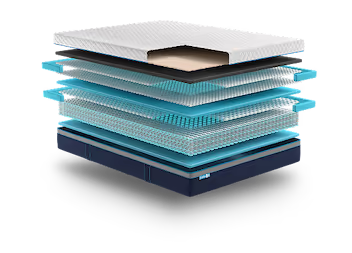
A useful distinction is between the support core and the comfort layers. The support core largely governs how much the body sinks and how the mattress maintains overall posture; the upper layers govern pressure distribution, surface feel and much of the thermal experience. Hybrids combine these functions using different materials. Biomechanical evidence suggests that the response of the complete sleep system matters more than the marketing category attached to one layer.
| Mattress type | Construction and mechanism | Likely strengths | Likely limitations | Evidence for clinical benefit |
|---|---|---|---|---|
| Bonnell/open-coil innerspring | Interconnected steel coils distribute loading through a linked spring network. | Low cost, buoyant feel, comparatively open structure for airflow. | Greater mechanical coupling means partner movement can propagate across the bed; pressure relief depends heavily on padding above the springs. | No convincing evidence that Bonnell construction itself improves pain or sleep outcomes over other designs. Mattress firmness is better studied than spring geometry. |
| Pocket-coil innerspring | Individual springs are enclosed separately, reducing direct coupling between neighbouring coils. | Localised response, easier zoning, generally less partner-motion propagation than linked coils. | Performance varies with coil gauge, number, layout and comfort layers; spring count alone is not a validated health metric. | Plausible ergonomic advantages, but little high-quality evidence that pocket coils are clinically superior to foam, latex or hybrids. |
| Memory foam / viscoelastic polyurethane | Temperature- and time-dependent foam deforms slowly under load and increases contact area. | Strong contouring and pressure redistribution; generally low rebound and low motion propagation. | Slow recovery can feel restrictive; close conformity may reduce convective heat loss for some sleepers. | Pressure-relief mechanisms are plausible, but there is inadequate evidence that memory foam as a material is superior for back pain. |
| Conventional polyurethane foam | Cellular foam provides support through compression and elastic recovery; formulations vary greatly in density and stiffness. | Light, inexpensive, easily engineered in multiple stiffness layers. | Large quality variation; long-term properties depend strongly on formulation and density. | Very limited material-specific clinical evidence. "Foam" is too broad a category to imply a health effect. |
| Natural or synthetic latex foam | Highly elastic cellular rubber, produced from natural rubber latex, synthetic elastomers or blends. | Rapid recovery, resilient support and less "slow-sink" sensation than memory foam. | Usually relatively expensive; natural rubber can contain allergenic proteins. | Clinical superiority over other materials has not been demonstrated. Natural rubber latex allergens have been extracted from latex mattresses, so known latex allergy warrants caution. |
| Hybrid | Usually pocket coils plus polyurethane, memory foam or latex comfort layers. | Can combine resilient support with surface contouring; design can be tuned widely. | "Hybrid" says very little about actual firmness or quality; added components complicate recycling. | No strong evidence that hybrids as a category outperform well-designed non-hybrid mattresses. |
| Adjustable-air mattress | One or more inflatable chambers alter support stiffness by changing internal pressure. | Allows substantial individual firmness adjustment; split systems can accommodate partners with different preferences. | Pumps, valves and chambers add mechanical complexity; perceived and objective responses may differ. | Some small studies show pain or sleep improvement, but evidence is substantially weaker than the medium-firm RCT evidence. |
| Waterbed | Water chamber redistributes body load hydrostatically. | Broad pressure distribution and distinctive conforming feel. | Motion, weight, thermal management and practical installation are disadvantages. | A randomised trial in chronic back pain found waterbed and foam surfaces modestly better than a hard mattress, but differences were small. |
| Futon / very thin floor mattress | Thin fibre, foam or mixed construction provides limited depth for body immersion. | Inexpensive, compact and portable. | For side sleepers or larger bodies, limited depth may create high shoulder/hip pressure; effects depend strongly on base and thickness. | Little direct clinical evidence supports futons as therapeutically better or worse than conventional mattresses. General biomechanical principles apply. |
| "Orthopaedic" mattress | Not a scientifically standardised construction; usually a firmer or zoned commercial product. | May suit some users if its actual mechanical properties match their needs. | The term can imply medical benefit without proving it. | Reviews explicitly caution that therapeutic "orthopaedic mattress" claims often exceed supporting evidence. |
| Zoned mattress | Different longitudinal regions have different stiffness, often under shoulders, lumbar region and pelvis. | Can theoretically accommodate regional differences in body mass and anatomy. | Incorrect zoning position can mismatch body dimensions; ideal zone properties are not standardised. | Promising biomechanical rationale, but evidence remains limited and heterogeneous. |
| Gel / "cooling" foam | Gel particles, phase-change materials, perforation or conductive layers are added to manage heat. | Some designs can alter local heat transfer or subjective thermal comfort. | "Cooling" can describe many unrelated technologies; laboratory temperature effects do not necessarily improve sleep. | A 2024 systematic review/meta-analysis found very-low to low-certainty evidence and no consistent improvement in sleep onset, sleep efficiency, sleep stages or total sleep time from cooling bedding strategies. |
| Smart mattress | Sensors and sometimes motorised air, thermal or mechanical systems alter the sleep surface or monitor physiology. | Potential for individualised firmness or thermal control. | Cost, durability, privacy and proprietary algorithms; consumer physiological monitoring is not equivalent to medical diagnosis. | Early studies are interesting but insufficient for routine therapeutic claims. |
| Adjustable bed base | Raises head, torso and/or legs while mattress construction remains separate. | May improve comfort for some users and enables posture modification. | Not a substitute for diagnosing pain or sleep-disordered breathing; compatible mattress required. | Recent data show improvements primarily in perceived sleep and back pain rather than objective sleep measures; stronger independent trials are needed. |
| Natural-fibre mattresses | Wool, cotton, flax, hemp, coir, horsehair or similar fibres, often combined with springs or latex. | Moisture buffering, resilience and reduced reliance on petrochemical foam are possible depending on design. | Natural does not automatically mean hypoallergenic, low-impact or clinically superior; fibres may compress and environmental impacts vary by agriculture and processing. | Clinical comparison data are sparse; claims are predominantly material- and sustainability-based rather than therapeutic. |
Pressure relief, alignment and motion transfer#
Pressure relief is achieved by increasing the area over which body weight is supported, reducing peak pressure under prominent areas such as the shoulder, greater trochanter and sacrum. A surface that is too firm may increase local pressure, whereas an excessively soft surface may permit heavy regions to sink enough to alter spinal posture. Experimental work combining spinal measurement with computational modelling found that both very soft and hard mattresses produced potentially unfavourable biomechanical effects compared with an intermediate surface: the softer surface increased craniocervical height and cervical loading, whereas the harder mattress reduced lumbar lordosis and increased contact pressure.
The often-repeated assumption that "firmer means more supportive" is therefore misleading, a point our firm vs soft guide covers in practical terms. Support is better understood as the ability of the mattress to prevent unwanted deformation while allowing anatomically necessary immersion. This is consistent with the 313-person RCT in which medium-firm mattresses outperformed firmer mattresses for non-specific low-back pain.
Motion isolation is mainly a mechanical property. Highly damped foams tend to dissipate movement locally, while interconnected spring systems transmit forces more readily; independently pocketed coils reduce this coupling. The clinical importance of such differences for sleep architecture has not been well established in randomised trials, so claims such as "zero partner disturbance" should be regarded primarily as engineering or marketing claims rather than established medical outcomes.
Thermal comfort#
Thermal comfort matters because sleep occurs alongside a reduction in core temperature and characteristic peripheral heat redistribution. However, marketing language around "cooling mattresses" has advanced faster than evidence that the technology meaningfully changes sleep. A 2024 systematic review and meta-analysis of nine randomised studies found low or very-low certainty evidence and no consistent improvements in sleep latency, sleep efficiency, sleep stages, wake after sleep onset or total sleep time from bedding-based cooling interventions.
A 2025 randomised crossover study of 34 adults using a temperature-controlled mattress cover found sizeable improvement in subjective sleep quality but no significant differences in actigraphic sleep measures or recorded biometrics, illustrating the distinction between perceived comfort and objectively measured sleep physiology. Ambient heat itself is more convincingly associated with worse sleep: a 2024 systematic review found that higher indoor or outdoor temperatures generally degrade sleep quality and duration, particularly during hot periods and in vulnerable groups.
Durability, hygiene and allergens#
High-quality comparative clinical data on mattress lifespan are surprisingly sparse. Real durability is determined by component density, spring fatigue, adhesives, textile abrasion, moisture exposure, body weight, foundation quality and usage pattern; therefore a simple rule such as "latex lasts X years" or "hybrids last Y years" is less scientifically justified than commercial guides often imply. The more reliable criterion is loss of functional support: visible sagging, permanent body impressions, edge collapse or a progressive recurrence of morning pain can indicate that the mattress is no longer performing adequately.
For allergies, mattress material is less important than allergen exposure management. Studies comparing spring, foam and water mattresses have not shown one mattress class to eliminate dust-mite exposure. Mite-impermeable mattress covers consistently reduce allergen levels, although reductions in allergen concentration do not always translate into large improvements in asthma, rhinitis or eczema outcomes.
Natural rubber latex deserves a specific caveat: latex proteins have been recovered from natural-latex mattresses and can represent a potential source of exposure for people with established latex allergy. People with a history of immediate latex reactions should therefore seek medically appropriate allergy advice before purchasing natural-rubber bedding.
For hygiene, removable washable covers, keeping bedding dry, periodic laundering and addressing excessive humidity are more defensible strategies than assuming that a foam or spring category is intrinsically "antibacterial". Claims that a mattress is antimicrobial, toxin-removing or immune-enhancing should be treated as product-specific claims requiring direct evidence.
Environmental impact and cost#
No mattress material is environmentally "best" under all conditions. Polyurethane foam depends on petrochemical or partly bio-based feedstocks and creates end-of-life challenges; steel springs require energy-intensive metal production but are more readily recoverable; natural latex involves agricultural production and processing; hybrids may be difficult to separate into recyclable streams because they combine adhesives, textiles, foam and metal. Comparative LCA research demonstrates that conclusions depend strongly on material quantities, service life and end-of-life treatment. Mattress waste is increasingly being studied as a circular-economy problem because conventional mixed-material products are difficult to recycle efficiently.
From a sustainability perspective, the most defensible principles are to buy a mattress that is likely to remain comfortable and mechanically adequate for a long time, prefer transparent material specifications, consider replaceable components where available, and use legitimate take-back or recycling routes. A superficially "green" material can have a worse per-year footprint if a product is replaced much sooner than a durable alternative; product lifetime is therefore a major variable in LCA.
Prices vary rapidly and are not indicators of clinical effectiveness. A basic open-coil mattress can cost a fraction of the price of a hand-made pocket-sprung one, but that gap reflects materials and labour, not evidence that spending more improves pain or sleep.
Firmness and individual mattress selection
The strongest single rule is to avoid choosing by firmness label alone. Choose a mattress whose mechanical response keeps the trunk and pelvis stable without creating painful pressure at the shoulder, hip or sacrum. Medium-firm is a rational population-level starting point, particularly for adults with non-specific low-back pain, but it is not a universal prescription.
Sleeping position#
For a side sleeper, the shoulder and hip must sink far enough that the thoracic and lumbar spine do not bow sideways. A mattress that is too hard increases peak pressure and can push the spine laterally; one that is too soft can allow the pelvis to sink disproportionately. Laboratory research indicates that the consequences of poor mattress support vary by habitual posture, supporting an individual rather than one-firmness-fits-all approach.
For a back sleeper, the objective is to support the pelvis and lumbar region without forcing the lumbar curve flat or allowing excessive pelvic sinking. Medium to medium-firm surfaces are often a practical starting point because experimental evidence suggests that extreme hardness can flatten lumbar lordosis and increase contact pressure.
For a stomach sleeper, excessive pelvic sinking can increase lumbar extension, while the head must normally be rotated to one side, creating prolonged cervical rotation. A 2025 systematic review found prone sleeping to be associated with greater low-back-pain risk than supported supine or side positions, although the underlying evidence was observational and limited. Consequently, people who develop pain in the prone position may benefit from experimenting with side or back sleeping rather than assuming that a new mattress alone will solve the problem.
Body size and morphology#
A person's effective mattress firmness is partly determined by body mass: the same foam or spring system deforms more under a heavier load. A lightweight person may barely engage deeper support layers and experience a mattress as quite firm; a larger person can penetrate farther into the same mattress and experience substantially different spinal support. This interaction between anthropometry, posture and bedding support is documented in ergonomic mattress research.
Consequently, body weight should not be converted into rigid internet rules such as "people above X kg need firm mattresses". What matters is whether the person obtains adequate immersion at prominent areas while maintaining stable pelvic and trunk alignment. Couples with large differences in body size may benefit from split firmness, dual-zone air chambers or mattresses specifically designed to provide different responses on each side; evidence for adjustable-air systems is promising but not yet strong enough to consider them clinically superior.
Pain conditions and age#
For chronic non-specific low-back pain, medium-firm surfaces have the best direct evidence. The Lancet RCT remains particularly influential because it was randomised, double-blind and multicentre; however, it studied a specific population with non-specific low-back pain and cannot be generalised to fractures, inflammatory spinal disease, radiculopathy or post-operative conditions.
For shoulder or hip pain, a surface that reduces local peak pressure without destabilising the spine is mechanically sensible, particularly for side sleepers, but high-quality trials defining an optimal material or firmness are lacking. Individually prescribed sleep surfaces have produced symptom improvements in some studies, though these are methodologically weaker than the large firmness RCT.
For neck pain, mattress and pillow should be considered together. Changing the mattress changes how far the shoulder and trunk sink, which alters the pillow height needed to maintain cervical alignment. Biomechanical studies show clear changes in cervical geometry with pillow height, but do not establish one correct height for everyone.
Older adults may have greater sensitivity to pressure, joint pain, mobility limitations and temperature extremes, so ease of turning and getting out of bed can matter as much as theoretical spinal alignment. Temperature research in community-dwelling older adults found substantial individual variation, with sleep efficiency tending to decline when bedrooms became excessively warm.
Couples#
For couples, the main variables are different firmness preferences, body-size differences, movement disturbance and temperature preference. Independently pocketed coils, damping foams and split or dual-chamber systems can mechanically reduce interaction, but there is little evidence that any one of those technologies reliably improves objective sleep outcomes across couples. Adjustable systems are useful primarily because they allow individualisation rather than because "air" itself has proven therapeutic superiority.
How to sleep properly
"Proper sleep" is better understood as a combination of adequate duration, consistent timing, a comfortable position, good sleep continuity and absence of untreated sleep disorders rather than one prescribed posture.
Position and spinal alignment#
In side sleeping, the head should be supported so that the neck remains approximately in line with the thoracic spine rather than dropping toward the mattress or being pushed upward. The knees may be slightly flexed; if the upper leg pulls the pelvis forward uncomfortably, a pillow between the knees can reduce hip rotation. The main ergonomic objective is neutral, comfortable alignment, not achieving a visually perfect straight line.
In back sleeping, the pillow should support the head and cervical region without markedly flexing the chin toward the chest. Some people with low-back discomfort find a cushion under the knees comfortable because hip and knee flexion can reduce tension across the lumbar region, although this is an individual comfort strategy rather than a universally tested treatment.
In prone sleeping, a high pillow can compound cervical extension and rotation. If a person cannot comfortably switch positions, using a very thin head pillow and avoiding excessive pelvic sinking is a reasonable ergonomic strategy. Evidence associating prone sleep with low-back pain remains limited enough that individuals who are pain-free should not be told that the posture is inherently dangerous.
Pillow height#
Pillow height must match shoulder width, head shape, mattress sink and sleeping position. In one biomechanical study, increasing pillow height from 110 to 170 mm substantially altered cervical angle and pressure distribution, demonstrating why there cannot be a universal centimetre value.
A side sleeper usually needs more pillow loft because the shoulder creates a larger gap between the head and mattress. A back sleeper generally requires less. A stomach sleeper typically requires the least. Pillow material itself appears less important than obtaining the correct support characteristics; comparative studies show that different pillow shapes and materials alter cervico-thoracic posture, but clinical evidence remains too limited to declare latex, memory foam, feather or "orthopaedic" pillows universally superior.
Sleep duration and timing#
The AASM and Sleep Research Society recommend that adults obtain seven or more hours of sleep per night on a regular basis to promote health. Regularly obtaining less than seven hours is associated with poorer cardiometabolic, mental-health, immune and performance outcomes, although individual requirements vary.
Regularity matters as well as quantity. A systematic review of 41 studies involving more than 92,000 adults found that later and more variable sleep timing was generally associated with worse health outcomes, although certainty ranged from very low to moderate. A 2023 expert consensus concluded that regular sleep onset and wake timing are important for health and performance.
A practical target is therefore to maintain a relatively stable wake time, obtain sufficient sleep opportunity before that time and avoid repeatedly shifting the sleep period by several hours between workdays and free days. This should be adapted for shift workers and people with diagnosed circadian-rhythm disorders.
Bedroom environment#
A bedroom should be dark enough, quiet enough and thermally comfortable, rather than kept at a rigid universal temperature. Research consistently indicates that excessive heat impairs sleep, while the optimum ambient temperature varies with clothing, bedding, humidity, age and individual physiology.
In older adults, one field study observed best sleep efficiency at approximately 20–25°C, with a clinically meaningful decline as temperature increased toward 30°C; this finding should not be interpreted as a universal recommendation that every bedroom be kept at 20–25°C. Bedding and sleepwear materially alter the microclimate at the skin, which helps explain why different people remain comfortable at different room temperatures.
Sleep hygiene and insomnia#
Good sleep habits include allowing adequate sleep opportunity, maintaining regular timing, reducing disruptive light and noise, avoiding behaviours that repeatedly condition the bed as a place for prolonged wakefulness, and addressing substances or medications that interfere with sleep when relevant.
For chronic insomnia, however, generic "sleep hygiene" is not equivalent to treatment. The AASM guideline recommends multicomponent cognitive behavioural therapy for insomnia, which includes behavioural and cognitive techniques such as stimulus control and sleep restriction/compression under appropriate guidance. Changing mattress after mattress without addressing chronic insomnia can therefore be both costly and ineffective.
Decision framework, medical red flags and research gaps
A practical mattress decision should begin with the problem to be solved, not the material name.
Identify the symptom pattern. If the mattress is visibly sagging, symptoms are clearly worse in bed or on waking, or comfort has progressively deteriorated, replacing the sleep surface is reasonable. Persistent neurological symptoms, severe unexplained pain or systemic symptoms require medical evaluation rather than a mattress experiment.
Start near medium or medium-firm unless you already know otherwise. This range has the strongest evidence in non-specific low-back pain, but firmness should then be adjusted for morphology and posture rather than treated as a medical rule.
Assess alignment and pressure simultaneously. Side sleepers should check whether the shoulder and hip can settle without numbness or painful pressure and whether the waist feels supported. Back sleepers should note whether the pelvis sinks excessively or the lumbar area feels unsupported. Any surface that is "supportive" but creates painful pressure is not a good fit.
Treat material as secondary. Memory foam may suit someone who values contouring and motion damping; latex may suit someone wanting faster rebound; pocket springs may suit someone preferring buoyancy and ventilation; hybrids combine characteristics; adjustable-air systems are useful when two people need different settings. There is no high-quality evidence that one of these material categories is universally healthiest.
Use a meaningful home trial where possible. Our guide to how mattress trials work sets out the usual conditions. Short showroom tests cannot reproduce hours of sustained tissue loading, thermal conditions and overnight movement. Because evidence supports individualisation, the practical value of a return or exchange period can be greater than another layer of marketing technology.
Do not pay a medical premium for unsupported language. "Orthopaedic", "doctor designed", "zero gravity", "spinal correction", "AI sleep optimisation", high coil count and "cooling gel" are not themselves evidence of improved clinical outcomes.
If you want to see how this framework applies to specific models, our ranked lists of the best mattresses for back pain and the best mattresses for side sleepers give the firmness, construction and trial length of every mattress we have tested. They are a way to narrow the field, not a substitute for the home trial.
When to seek medical advice#
Persistent loud snoring accompanied by witnessed apnoeas, choking/gasping during sleep or significant daytime sleepiness should prompt evaluation for obstructive sleep apnoea. The AASM states that polysomnography is the standard diagnostic test when OSA is suspected after comprehensive sleep evaluation, with technically adequate home sleep-apnoea testing appropriate for selected uncomplicated adults. Consumer mattress sensors cannot establish or exclude the diagnosis.
Persistent difficulty initiating or maintaining sleep, or waking earlier than desired with daytime consequences, should be assessed if it becomes chronic. CBT-I has a much stronger evidence base than specialised mattresses for treating chronic insomnia.
Back or neck pain warrants clinical evaluation when it is severe, progressive, associated with weakness, numbness, bowel or bladder disturbance, fever, unexplained weight loss, significant trauma, or fails to improve despite reasonable conservative measures. A mattress can alter mechanical loading, but it cannot diagnose or treat serious spinal disease.
What the research still does not answer#
The field lacks sufficiently large, independently funded trials directly comparing modern memory-foam, latex, pocket-spring and hybrid mattresses under standardised mechanical conditions. Current research frequently compares complete commercial products, making it difficult to determine whether observed effects result from the material, firmness, zoning, thickness or another component.
There is also no validated universal definition of optimal nocturnal spinal alignment, nor established thresholds relating pressure maps to future pain or sleep quality. Longer trials are needed because several nights of laboratory testing cannot establish whether a surface remains supportive after years of mechanical fatigue.
Research on couples, heavier adults, older adults, pregnancy, joint disease and different body morphologies remains comparatively limited. Adjustable-air and zoned systems are theoretically well suited to individualisation, but larger independent studies are needed before they can be recommended on medical grounds.
Similarly, active cooling and smart-mattress systems are technologically promising but currently have much stronger evidence for changing thermal sensation or subjective comfort than for improving objectively measured sleep architecture or long-term health outcomes.
The most defensible conclusion from the current literature is therefore deliberately modest: choose a non-sagging surface whose firmness allows both comfortable pressure distribution and stable alignment for your individual body and habitual posture; medium-firm is a good evidence-based starting point, not a universal endpoint. Sleep duration, regularity, treatment of sleep disorders and the broader sleep environment remain at least as important as mattress construction.
Selected references
- Kovacs FM, Abraira V, Peña A, et al. Effect of firmness of mattress on chronic non-specific low-back pain: randomised, double-blind, controlled, multicentre trial. The Lancet. 2003;362:1599–1604. DOI: 10.1016/S0140-6736(03)14792-7.
- Caggiari G, et al. What type of mattress should be chosen to avoid back pain and improve sleep quality? Review of the literature. Journal of Orthopaedics and Traumatology. 2021;22:51. DOI: 10.1186/s10195-021-00616-5.
- Radwan A, et al. Effect of different mattress designs on promoting sleep quality, pain reduction, and spinal alignment in adults with or without back pain: systematic review of controlled trials. Sleep Health. 2015;1:257–267. The review identified 24 controlled studies and concluded that medium-firm and individually adjusted surfaces had the most consistent support.
- Wong DWC, Wang Y, Lin J, Tan Q, Chen TL, Zhang M. Sleeping mattress determinants and evaluation: a biomechanical review and critique. PeerJ. 2019;7:e6364. DOI: 10.7717/peerj.6364.
- Verhaert V, Haex B, De Wilde T, et al. Ergonomics in bed design: the effect of spinal alignment on sleep parameters. Ergonomics. 2011;54:169–178. DOI: 10.1080/00140139.2010.538725.
- Ren S, Wong DWC, Yang H, Zhou Y, Lin J, Zhang M. Effect of pillow height on the biomechanics of the head-neck complex: investigation of cranio-cervical pressure and cervical spine alignment. PeerJ. 2016;4:e2397. DOI: 10.7717/peerj.2397.
- Gordon SJ, Grimmer-Somers KA, Trott P. A randomized, comparative trial: does pillow type alter cervico-thoracic spinal posture when side lying? Journal of Multidisciplinary Healthcare. 2011;4:321–327. DOI: 10.2147/JMDH.S23028.
- Saini Y, Rai A, Sen S. Relationship Between Sleep Posture and Low Back Pain: A Systematic Review. Musculoskeletal Care. 2025;23:e70114. DOI: 10.1002/msc.70114.
- Pasquier F, Chauvineau M, Castellini G, et al. Does body cooling facilitated by bedding compared to control condition improve sleep among adults? A systematic review and meta-analysis. Journal of Thermal Biology. 2025;127:104030. DOI: 10.1016/j.jtherbio.2024.104030.
- Chaput J-P, Dutil C, Featherstone R, et al. Sleep timing, sleep consistency, and health in adults: a systematic review. Applied Physiology, Nutrition, and Metabolism. 2020;45:S232–S247. DOI: 10.1139/apnm-2020-0032.
- Sletten TL, Weaver MD, Foster RG, et al. The importance of sleep regularity: a consensus statement of the National Sleep Foundation sleep timing and variability panel. Sleep Health. 2023;9:801–820. DOI: 10.1016/j.sleh.2023.07.016.
- Watson NF, Badr MS, Belenky G, et al. Recommended amount of sleep for a healthy adult: a joint consensus statement of the American Academy of Sleep Medicine and Sleep Research Society. Journal of Clinical Sleep Medicine. 2015;11:591–592.
- Edinger JD, Arnedt JT, Bertisch SM, et al. Behavioral and psychological treatments for chronic insomnia disorder in adults: an American Academy of Sleep Medicine clinical practice guideline. Journal of Clinical Sleep Medicine. 2021;17:255–262. DOI: 10.5664/jcsm.8986.
- Kapur VK, Auckley DH, Chowdhuri S, et al. Clinical Practice Guideline for Diagnostic Testing for Adult Obstructive Sleep Apnea. Journal of Clinical Sleep Medicine. 2017;13:479–504. DOI: 10.5664/jcsm.6506.
Related reading#
- Firm vs soft mattresses – choosing a firmness for your body and position
- Memory foam vs hybrid – how the two constructions feel
- Pocket springs vs open coil – spring types explained
- Cooling mattresses – what helps hot sleepers in practice
- How long a mattress lasts – the signs that support has gone
- Eco-friendly mattresses – what the sustainability claims are worth