Who the Emma NextGen Premium Plus suits
The NextGen Premium Plus answers a specific brief: couples who want the near-silent motion isolation only foam delivers, but who refuse to accept the sagging support and trapped heat that usually come with it. It is the most sophisticated all-foam build Emma makes, and at 27cm it is deep enough to behave like a hybrid where it counts.
Buy it if a restless partner is the main problem you are solving. Buy the Emma Original Pro instead if you want edge support and a springier feel – it costs £20 more and is the better choice for most single sleepers. If budget is the constraint, the Emma Original does most of this job for £210 less.
Construction and materials
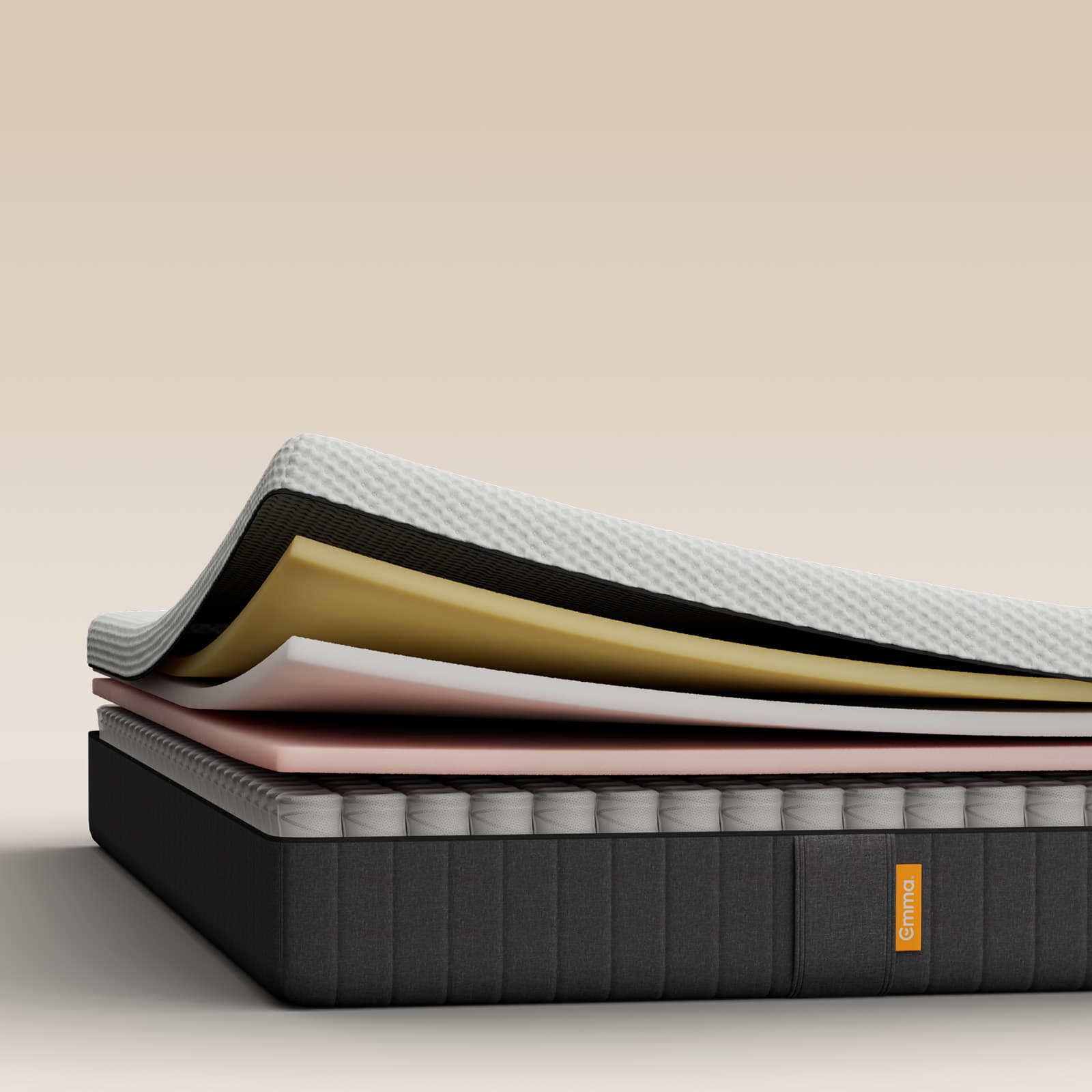
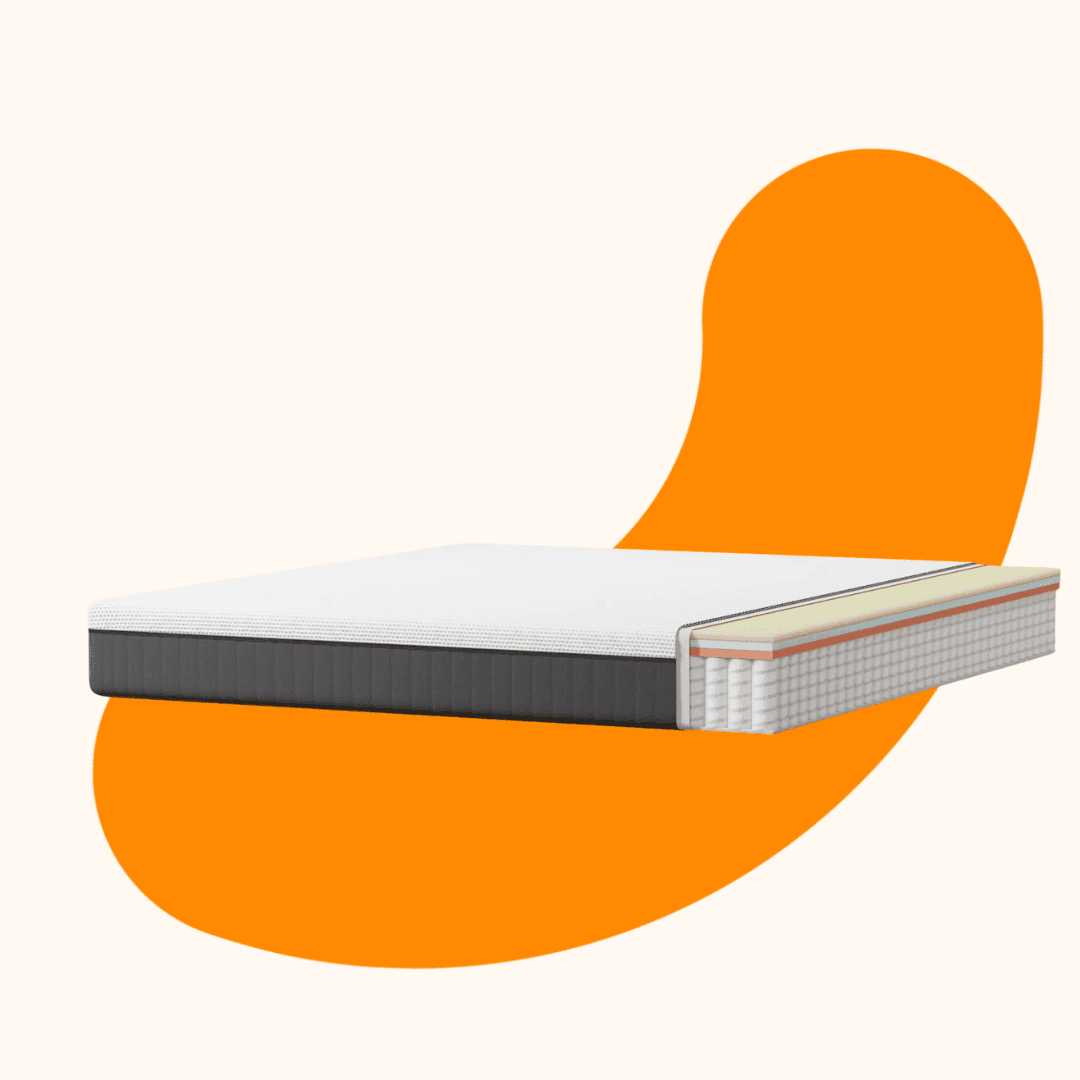
The 27cm stack uses an aerospace-inspired open-cell comfort foam on top, a graphite-infused foam layer beneath it, and Emma's HRX support foam as the base. The graphite matters: it is a conductive filler that pulls heat out of the foam faster than the polymer alone can, which is the standard engineering answer to memory foam's insulating problem. The open-cell top layer adds airflow and a faster recovery than classic memory foam.
Where a cheaper foam mattress runs two layers, this runs three at greater depth, and that is what produces a 9.0 support score with no spring unit anywhere in the build.
Comfort and support
We score it 9.1 for comfort, the highest in the Emma range, and 9.0 for support. On your back the graphite layer and HRX base hold the pelvis level while the top foam fills the lumbar curve. On your side the open-cell layer lets the shoulder in without the slow, sunken feeling of dense memory foam.
The feel is a plush medium: softer than the medium-firm Original Pro and closer to the standard Original, but with markedly more support underneath it. That combination – soft surface over genuinely firm foundation – is what heavier sleepers who dislike firm mattresses are usually looking for and rarely find. See our couples guide for how it compares with the hybrids.
Temperature
Better than any other all-foam mattress we list, and still not as cool as a hybrid. The graphite infusion and the open-cell top layer move heat away from the surface effectively, so warm sleepers will be comfortable. If you wake up sweating several nights a week, physics is not on foam's side at any price – choose the Emma Luxe Cooling or read our hot sleepers guide.
Edge support and motion isolation
Motion isolation is the headline: this is as close to movement-proof as a mattress gets, because there is no spring unit to transmit anything. A partner getting up at 5am simply does not register on the other side of the bed. Edge support is the trade-off, and it is the one thing £679 does not buy you here. The 27cm depth helps and the perimeter holds better than on the thinner Original, but a sprung mattress at this price will always beat it for sitting on the side or sleeping right at the edge.
Durability, trial and warranty
The 200-night trial and 10-year warranty covering sagging beyond 2.5cm apply as across the range. Higher-density foams in a deeper stack resist permanent compression better than thin budget builds, and the HRX base is the layer doing the long-term structural work. Expect 7–9 years of nightly use. Rotate head-to-toe monthly for the first year, then quarterly.
Our verdict
The NextGen Premium Plus is the mattress to buy when motion isolation is non-negotiable: a light-sleeping partner, mismatched schedules, a bed shared with a child or a dog. It earns its Best for Couples badge honestly, and a 9.0 support score from an all-foam build is a genuine engineering achievement. Our reservation is purely commercial – at £679 it sits £20 below the sprung Original Pro, which beats it on edge support and airflow. If silence in the bed matters more than either of those, this is the right buy. If not, the Pro is better value.