Who the Simba Natural Hybrid Source suits
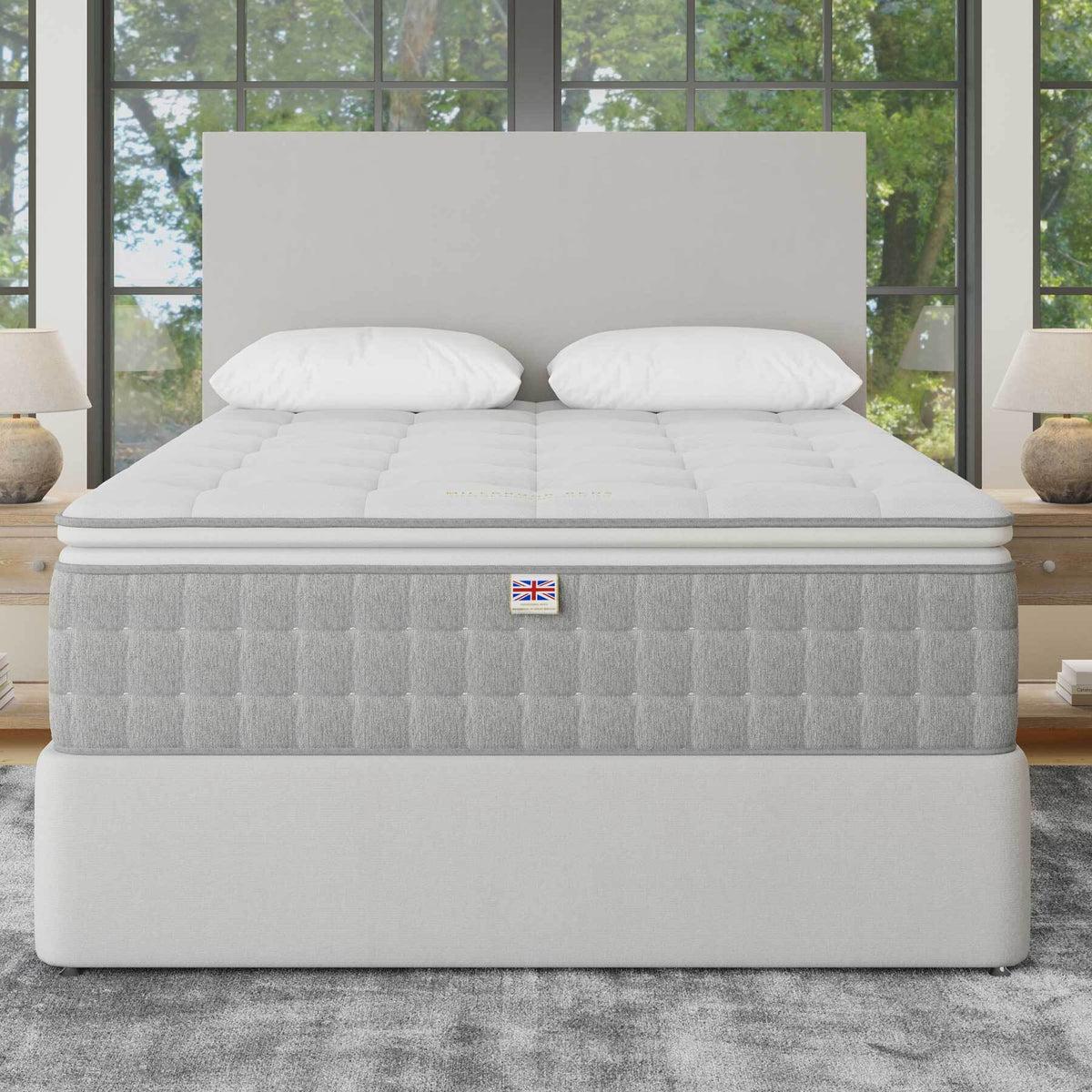
Simba built its name on foam-and-spring hybrids sold in a box. The Natural Hybrid range is a different kind of mattress from the same company: wool and springs, tufted, made in the UK and delivered flat, much closer to a traditional pocket-sprung mattress from a bed shop. The Source is the first of three, below the Escape and the Apex.
It suits people who sleep warm on foam, who prefer natural fillings, or who simply like the feel of a sprung mattress with a quilted wool top. Back and combination sleepers are best served by its medium-firm feel. Our guide to wool mattresses explains what wool does and does not do, and the best natural mattresses page shows the alternatives.
Construction and materials
Eight layers across 28cm. Under a plant-derived viscose cover with invisible tufting sit four layers of wool: Hampshire wool, British wool, a second Hampshire layer and a thick British wool support layer. Below them is one layer of up to 1,900 titanium alloy Aerocoil® microsprings, another layer of British wool, and the CoreMax™ base of up to 1,000 high-carbon steel springs in seven zones, with a reinforced frame. Spring counts are for a king; Simba gives the total as up to 2,900.
Simba's materials list for the Natural Hybrid range names wool, springs and the viscose cover, and no foam comfort layers. That is the point of the range, and it is the main difference from the Hybrid Pro, which costs the same at list price.
Comfort and support
We score the Source 8.9 for comfort and 8.8 for support. Simba rates it medium-firm. Wool gives a different sort of cushioning from foam: it does not mould around you, it compresses and springs back, so you lie on the mattress more than in it. The zoned steel base gives firm, even support with a little extra give at the shoulders and hips. People who like the slow, hugging feel of memory foam will not find it here.
Temperature
This is the strongest argument for the range. Wool breathes and absorbs moisture, and there is a lot of it between you and the springs, with open spring layers underneath for airflow. For people who overheat on foam, a wool and spring mattress is usually the most reliable fix.
Care, trial and delivery
Two conditions are worth knowing before you order. The cover does not come off, and Simba's product page says a mattress protector is required to keep the 10-year guarantee valid, so budget for one; our mattress protector guide covers the options. Simba also says never to vacuum the mattress, because suction can shift the wool fillings: brush it instead.
Wool fillings settle with use, and Simba says body impressions are normal. It recommends rotating the mattress head to foot every couple of months for the first six months and twice a year after that; our guide to rotating a mattress covers the routine. It does not need turning over.
Unlike Simba's foam hybrids, the Natural Hybrid mattresses are not rolled into a box. They are delivered flat, free of charge, to the room you choose, within 10 working days. That is slower than next-day delivery, and it means checking the route up the stairs, but a mattress that has never been compressed is at full depth from the first night.
Simba's 200-night trial applies: if the mattress is not right, Simba collects it free of charge and refunds you. That is one of the longest trials in the UK, and it is a refund, not an exchange. Our guide to trial periods explains why that difference matters. The guarantee is 10 years against manufacturing faults.
Our verdict
The Source is the sensible way into Simba's natural range: the same seven-zone base and wool build as the dearer models, with one microspring layer in place of two or three. Our 7.7 for value reflects a £1,299 list price for a double; in the Black Friday Sale it was £974, and at that price it competes well with traditional wool and pocket-spring mattresses that come with far shorter trials.