1. Buying too firm "for your back"#
The biggest myth in mattress buying. The evidence favours medium-firm, not firm, for comfort, sleep quality and spinal alignment in most people,1 and a very firm mattress can actually worsen back pain. Start at medium-firm and adjust for your body.
2. Ignoring your sleeping position#
Your position is the single biggest clue to the feel you need, softer for side sleepers, firmer for front sleepers. Buying without considering it is how people end up with sore shoulders or aching backs. See our sleeping position guide.
3. Judging a mattress in a showroom#
Five minutes lying down tells you almost nothing. Comfort depends on the interaction between sleeper and surface over a full night, and it takes weeks to adapt.2 Always buy with a proper home trial.
4. Skipping the trial period or returns terms#
A long trial is your safety net. Check how long it is, whether it's genuinely free, and whether made-to-order items are excluded before you buy.
5. Falling for the RRP discount#
Many brands list a high reference price and "discount" heavily from it. Judge value on the price you actually pay on the day, not the headline saving.
6. Forgetting about temperature#
If you sleep hot, a dense all-foam mattress can make it worse. Favour breathable hybrids, latex or cooling covers, see our cooling guide.
7. Overlooking durability#
Cheap, low-density foam softens fast, while quality foams and springs hold their feel for years.3 A slightly higher upfront price often costs less per year of good sleep.
8. Buying the wrong size#
Couples in particular underestimate how much space they need. Sizing up usually improves sleep more than almost any other upgrade, see our UK sizes guide.
9. Neglecting the base and the pillow#
A great mattress on a sagging base, or paired with the wrong pillow, won't deliver. Both affect support and alignment, see our pillow guide.
10. Keeping an old mattress too long#
Support and hygiene both degrade over years of use. If you wake stiff, or your mattress is sagging or past its warranty, it's time, see our when to replace guide.
Ready to choose well? Browse the full range or take our quiz for a personalised match.
Mistakes specific to buying online#
Most UK mattresses are now bought without being seen, which removes the showroom mistakes and adds new ones:
- Not measuring the route in. A rolled foam or hybrid mattress fits up almost any staircase. A traditional pocket-sprung mattress delivered flat may not. Measure the tightest turn before ordering a flat-delivered mattress.
- Assuming delivery means "to the bedroom". Many couriers deliver to the front door only. If you cannot carry a 30kg mattress upstairs, check for room-of-choice delivery before you pay.
- Missing the made-to-order exclusion. Custom sizes and some brands' whole ranges are excluded from trials and returns. It is usually in the terms, not the headline.
- Ordering a UK size for a European frame. IKEA and other continental frames take 140 x 200cm or 160 x 200cm, not UK doubles and kings. Check the frame, not the label on the old mattress. See our EU sizes guide.
- Judging on the first night. A vacuum-packed mattress needs 24 to 72 hours to fully expand and your body needs two to four weeks to adapt. Almost every "it felt wrong" return in the first week is premature.
- Not photographing the mattress on arrival. A quick photo of the packaging and the expanded mattress protects you if there is a dispute about damage or dimensions later.
The mistake the list above does not mention: buying by brand#
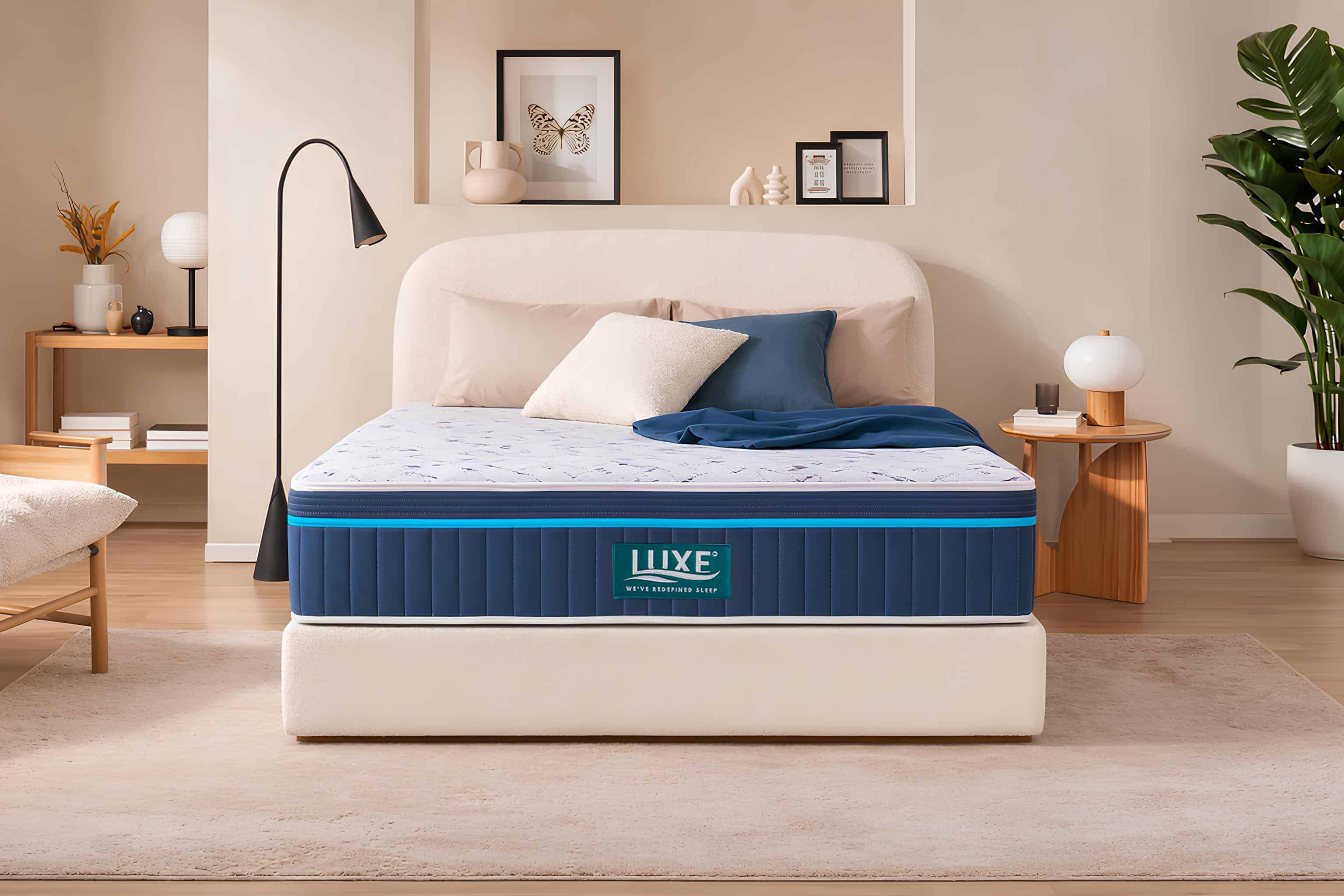
Bed-in-a-box marketing is built on the idea that one mattress suits everyone, and that the brand is the decision. It is not. Within a single brand, the medium and the firm models suit different people, and across brands a well-specified £400 mattress regularly outscores a heavily advertised £900 one. Our catalogue makes the point: the Luxe Velour Hybrid at £399 and the Emma Original at £469 score within a few tenths of mattresses costing twice as much. Choose the specification (firmness, type, depth) first, then the brand that delivers it at the best price. Our best-of lists are organised that way for exactly this reason.
A sixty-second pre-purchase checklist#
Before you click buy, you should be able to answer every one of these:
- What is my sleeping position, and what firmness does it point to? (Side: medium/medium-soft. Back: medium/medium-firm. Front: medium-firm/firm.)
- Does my weight move that a notch? (Under ~60kg: softer. Over ~90kg: firmer and deeper.)
- Do I sleep hot? If yes, is this a hybrid, sprung or latex mattress, or an open-cell foam?
- Is the depth at least 25cm (or 28cm if I am over 90kg)?
- How long is the trial, who pays for the return, and is this specific model included?
- What is the warranty length and the sagging threshold it covers?
- Will it fit the frame (UK vs EU size) and get up the stairs?
- Is the price I am paying the real price, or an "RRP" that nobody pays?
If two or more answers are "I don't know", stop. Our 60-second quiz handles the first three, and the review page for any mattress we have scored lists depth, trial and warranty.
What to do if you have already made one#
Most mistakes are recoverable. Too firm on the surface but supportive: a topper fixes it. Too soft, sagging, or wrong for your position: use the trial; that is what it is for, and a return in week three is not a failure. Outside the trial and sagging inside the warranty threshold: the warranty is the route, so document the dip with a straight edge and ruler. Outside both: a topper buys a year or two while you save, and this time the checklist above goes first.
Frequently asked questions#
What is the most common mattress buying mistake?#
Buying too firm in the belief that firm is better for the back. The evidence favours medium-firm for comfort, sleep quality and alignment,1 and a very firm mattress often makes back pain worse. The second most common is ignoring sleeping position.
How long should you try a mattress before deciding?#
At least three to four weeks. A new mattress needs a few days to expand and your body needs weeks to adapt away from the old one. Comfort is about the fit between sleeper and surface over time,2 and the first night tells you very little.
Is it a mistake to buy a mattress online?#
No, provided it comes with a genuine home trial. Online buying with a 100-night-plus trial is a better test than any showroom. The mistakes are practical: missing exclusions, wrong sizes for European frames, and not checking delivery to the room.
Should I buy a mattress in a sale?#
Yes, but judge the sale price against other mattresses, not against the RRP. Many brands run a permanent discount from a reference price nobody pays. A "£1,000 mattress at £500" is a £500 mattress; compare it with other £500 mattresses.
What should I check before buying a mattress?#
Firmness for your position and weight, depth, type (for temperature), trial length and return terms, warranty and its sagging threshold, size against your actual frame, and delivery to the room. The checklist above covers all eight in a minute.
References#
- Caggiari G, Talesa GR, Toro G, Jannelli E, Monteleone G, Puddu L. What type of mattress should be chosen to avoid back pain and improve sleep quality? Review of the literature. Journal of Orthopaedics and Traumatology. 2021;22:51. doi:10.1186/s10195-021-00616-5
- Robbins R, Quan SF, Barger LK, et al. Validation of the Boston Mattress Satisfaction Questionnaire. Frontiers in Sleep. 2025;4:1509420. doi:10.3389/frsle.2025.1509420
- Vlaović Z, Klarić N, Domljan D. Investigating the Impact of Long-Term Use on Mattress Firmness and Sleep Quality: Preliminary Results. Applied Sciences. 2024;14(21):10016. doi:10.3390/app142110016