Why mattress temperature matters#
Your body needs to shed a little heat to fall and stay asleep. A mattress that traps that heat keeps you above the comfortable threshold, leading to restlessness and night-time waking. Understanding which materials hold heat, and which let it escape, is the key to choosing a bed that works with your body rather than against it.
Where the heat builds up#
Research on mattress cushioning materials shows that the temperature at the body-mattress interface is highest where you press in most, the back, buttocks and thighs, and that the cushion material directly changes that interface temperature.1 In other words, the layer touching you matters more than anything deeper in the mattress.
How each material behaves#
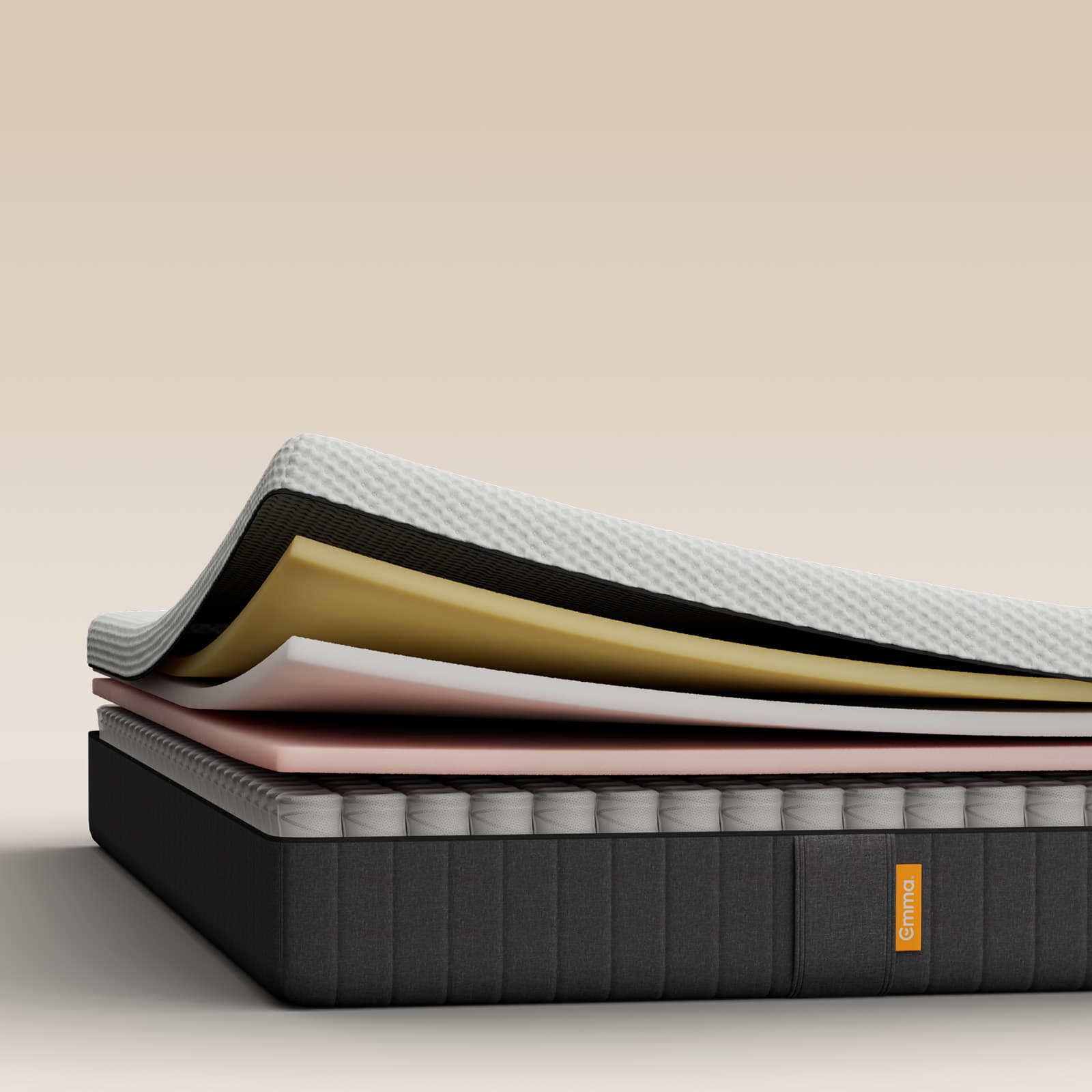
- Traditional memory foam: dense and slow-recovery, it hugs the body and reduces the surface area exposed to air, so it tends to sleep warm.
- Open-cell, gel and CoolMax foams: engineered with more airflow and heat-spreading, noticeably cooler than classic memory foam.
- Latex: naturally open-structured and high-rebound, it resists heat build-up and keeps you nearer the surface.
- Pocket springs: the open cavity between springs moves air through the mattress, the best material for raw airflow.
- Natural-fibre covers (wool, cotton): wick moisture and help regulate temperature; wool in particular buffers both heat and humidity.
Airflow and how deep you sink#
Two design factors decide how warm a mattress feels. First, airflow, open structures (springs, latex, breathable covers) carry heat away, while dense foam blocks it. Second, contouring, the more your body sinks in, the less skin is exposed to moving air, so a slightly firmer, more responsive surface sleeps cooler than a deep-hug one. This is why hybrids, springs plus a moderate comfort layer, are the most reliable cool-sleeping choice.
Can active cooling go further?#
For those who run very hot, temperature-controlled bedding is an emerging option. A controlled study found a temperature-regulating mattress cover increased slow-wave (deep) sleep compared with a normal night, showing that managing surface temperature can measurably improve sleep depth.2 For most people, though, the right materials plus breathable bedding solve the problem at far lower cost.
How to use this when you buy#
- Sleep hot? Favour a hybrid or latex, a breathable natural-fibre cover, and a slightly firmer feel.
- Love foam? Choose open-cell, gel or CoolMax versions rather than dense classic memory foam.
- Layer wisely: avoid plasticky waterproof protectors that trap heat, pick a breathable one.
See our best cooling mattress guide, browse breathable hybrids, or take our quiz for a personalised match.
References#
- Li L, Zhou X, Wu Y, et al. Exploring the effect of mattress cushion materials on human-mattress interface temperatures, pre-sleep thermal state and sleep quality. Indoor and Built Environment. 2021;30(5):650–667. doi:10.1177/1420326X20903375
- Moyen NE, Ganio MS, Burchfield JM, et al. A temperature-controlled mattress cover increases slow-wave sleep. SLEEP. 2023;46(Suppl 1):A100. doi:10.1093/sleep/zsad077.0227