Why weight changes everything#
Firmness ratings are measured against an average body. The more you weigh, the further you compress any mattress, so the same model feels firmer to a lighter person and softer to a heavier one. That's why two people in the same sleeping position can need different beds, and why a one-size-fits-all firmness rarely works for everyone.
The starting point#
For the general population, the evidence favours medium-firm for comfort, sleep quality and spinal alignment.1 Use that as your baseline, then shift firmer or softer based on where you sit on the weight scale.
Lighter sleepers (under roughly 60 kg)#
You won't compress a firm mattress enough to get its pressure relief, so it can feel like sleeping on a board, especially on your side. Lean softer, toward medium or medium-soft, so the surface contours to your shoulders and hips. Plush foam and softer hybrids suit lighter frames well.
Average-weight sleepers (roughly 60–90 kg)#
You're closest to how firmness is rated, so the standard advice applies most directly. Medium to medium-firm works for most, fine-tuned by your sleeping position rather than your weight.
Heavier sleepers (over roughly 90–100 kg)#
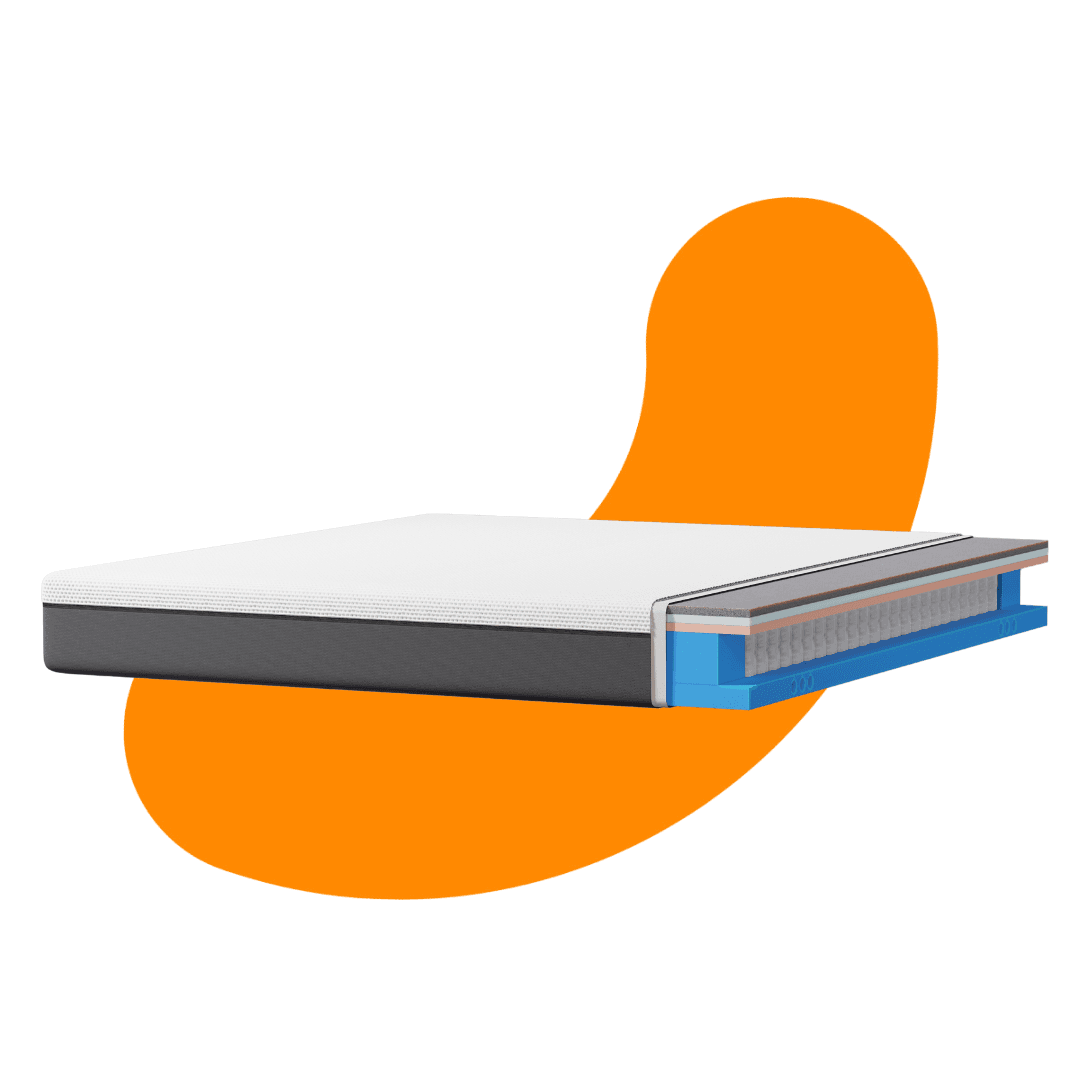
You sink further, so support is the priority, a too-soft mattress lets the hips drop and the spine sag. Lean firmer, and favour a robust core. Hybrids with sturdy pocket springs or high-density foam hold up best and resist the early softening that cheap foam suffers.2 Look for good edge support and adequate depth too.
Couples with a big weight gap#
If partners differ a lot in weight, a single firmness is a compromise. Options include a medium-firm hybrid (the most forgiving middle ground), a mattress with dual-firmness or zoned construction, or splitting into two linked mattresses on an adjustable base. Strong motion isolation also helps the lighter partner sleep through the heavier one's movement.
It still comes down to fit#
Weight is a powerful guide, but comfort ultimately depends on the interaction between sleeper and surface, which is why personal preference and a home trial matter.3 Use weight to narrow the shortlist, then test before you commit.
Find your match in our firmness guide and sleeping position guide, or take our quiz for a personalised recommendation.
References#
- Caggiari G, Talesa GR, Toro G, Jannelli E, Monteleone G, Puddu L. What type of mattress should be chosen to avoid back pain and improve sleep quality? Review of the literature. Journal of Orthopaedics and Traumatology. 2021;22:51. doi:10.1186/s10195-021-00616-5
- Vlaović Z, Klarić N, Domljan D. Investigating the Impact of Long-Term Use on Mattress Firmness and Sleep Quality: Preliminary Results. Applied Sciences. 2024;14(21):10016. doi:10.3390/app142110016
- Robbins R, Quan SF, Barger LK, et al. Validation of the Boston Mattress Satisfaction Questionnaire. Frontiers in Sleep. 2025;4:1509420. doi:10.3389/frsle.2025.1509420