Why your mattress can trigger allergies#
Mattresses are warm, humid and full of the skin cells dust mites feed on, making them the single biggest dust-mite reservoir in most homes. For people with allergic rhinitis or asthma, mite droppings are a leading indoor trigger, which is why symptoms often peak overnight and on waking.
Which materials resist dust mites?#
No mattress is truly "dust-mite proof", but some constructions are far less hospitable:
- Latex: dense and naturally resistant to mites and mould, the strongest material choice for allergy sufferers.
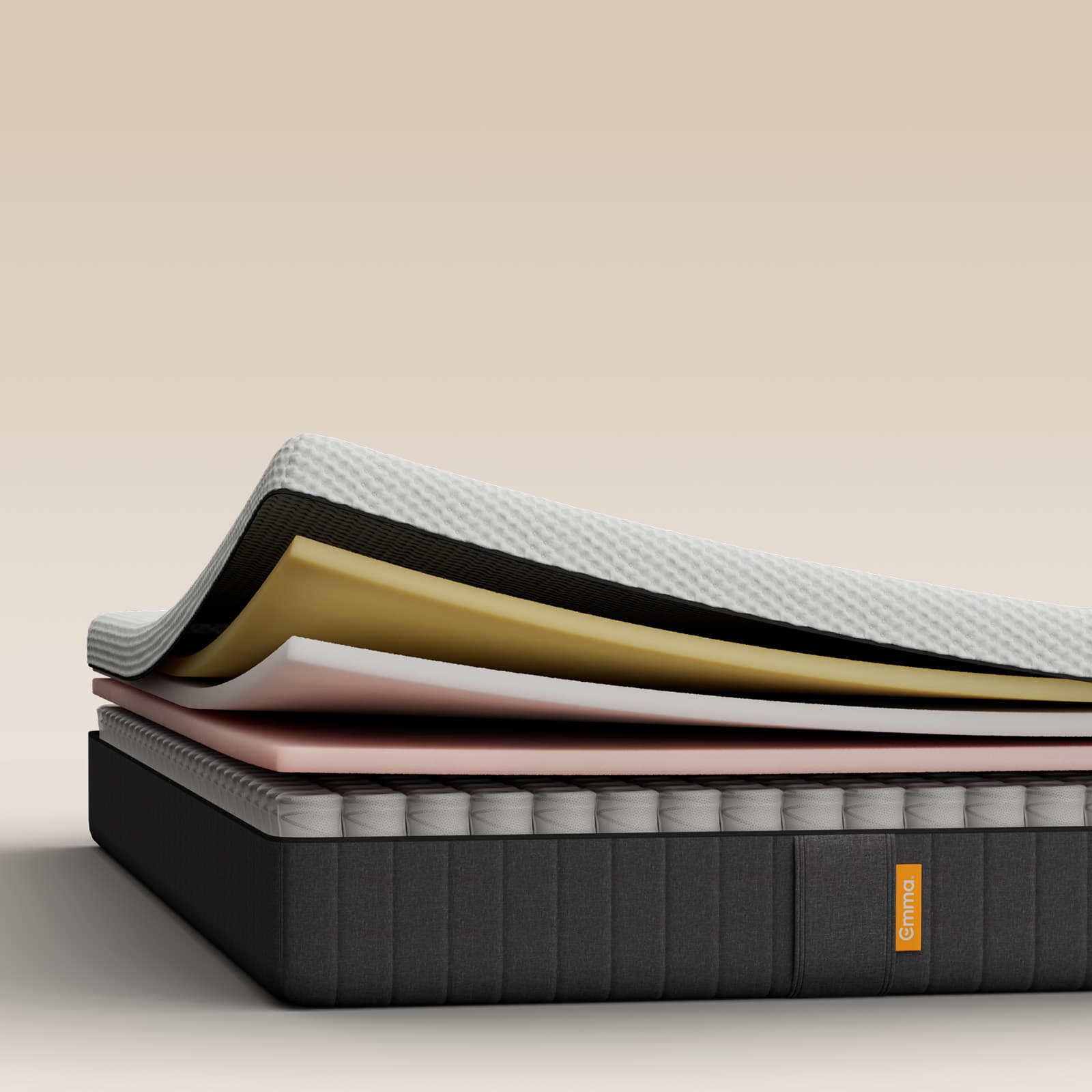
- Memory foam and high-density foam: the solid structure gives mites little room to burrow compared with a traditional spring mattress full of air space and fabric.
- Pocket sprung: more internal cavities and fillings, choose one with a tightly woven, washable cover and pair it with a barrier protector.
What about the "new mattress smell"?#
People with sensitivities often worry about foam off-gassing. Independent testing of memory-foam emissions found measured volatile organic compounds well below health-based guidance values, decaying within weeks of unboxing.1 Airing a new mattress in a ventilated room for a day or two before use is a sensible precaution, but for most people the odour is mild and short-lived. If you are highly chemically sensitive, look for natural latex and certified low-emission foams.
The protector matters as much as the mattress#
An allergen-barrier mattress protector with a tightly woven or membrane layer stops mites and their waste passing between you and the mattress, and it can be washed hot regularly. This is the highest-impact, lowest-cost step you can take. See our mattress protector guide, and choose a breathable one so it doesn't trap heat and moisture, which mites love.
Habits that keep allergens down#
- Wash bedding weekly at 60°C to kill mites.
- Air the bed each morning, throw the covers back so trapped moisture evaporates instead of feeding mites.
- Keep the bedroom cool and well ventilated, mites thrive in warm, humid air.
- Vacuum and rotate the mattress periodically, see our mattress cleaning guide.
- Replace an old, stained mattress, allergen load builds up over years of use.
Browse latex mattresses and foam mattresses, or take our quiz for a personalised match.
References#
- Beckett EM, Cackovic K, Charles S, et al. Quantification of volatile organic compound emissions from memory foam mattresses and predicted inhalation exposures. Chemosphere. 2022;303:134945. doi:10.1016/j.chemosphere.2022.134945