The greenwashing problem#
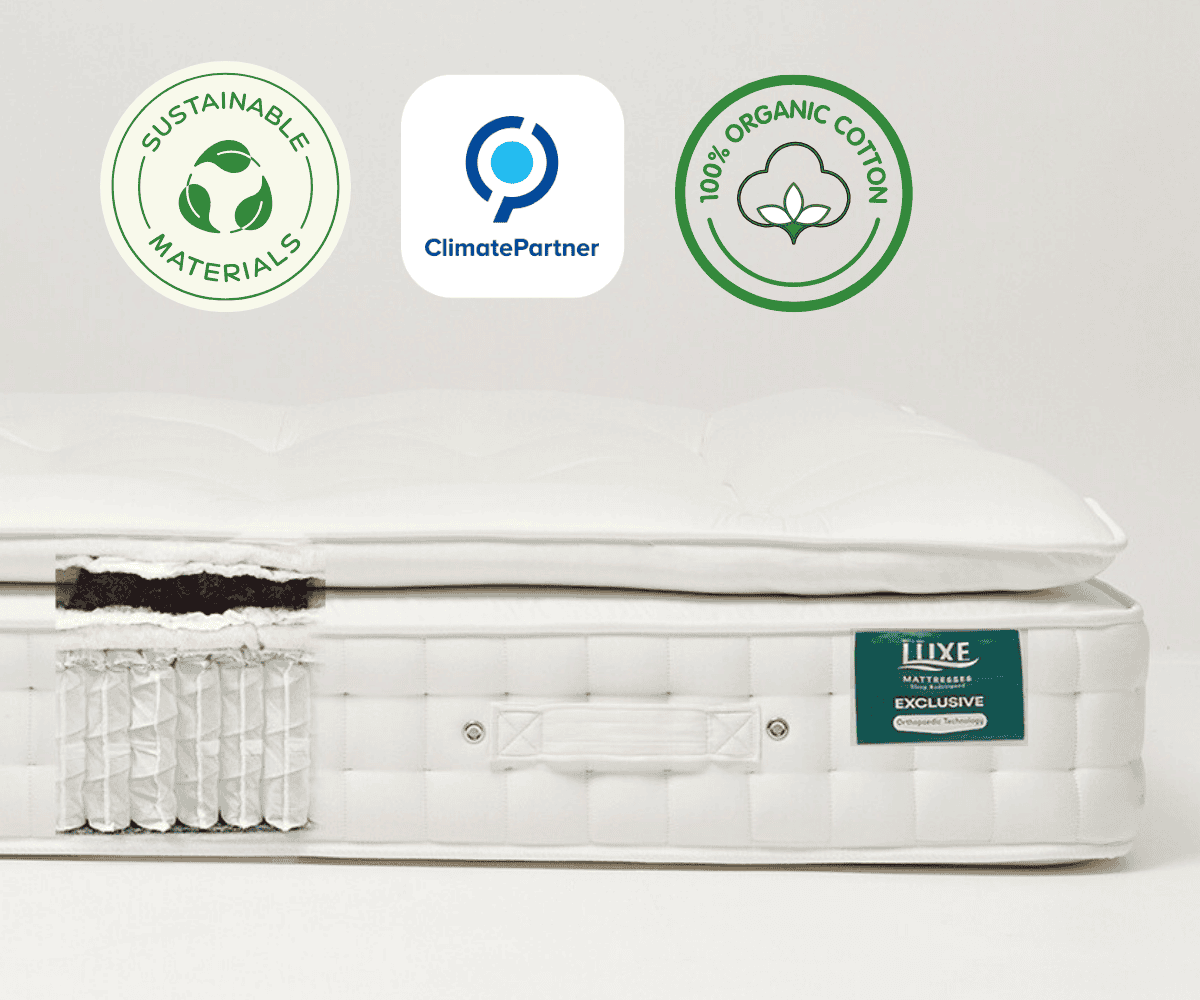
"Natural" and "organic" are unregulated terms on UK mattress labels. Any brand can use them without certification or verification. The only way to confirm genuine organic credentials is through recognised third-party certification. Don't rely on marketing language alone.
Certifications to look for#
GOLS (Global Organic Latex Standard): The only internationally recognised certification for organic latex. Requires minimum 95% organic latex content and ethical manufacturing. Look for GOLS when any latex content is claimed.
GOTS (Global Organic Textile Standard): Covers organic textile fibres, wool, cotton, fillings and covers. GOTS-certified materials were grown without synthetic pesticides and processed to environmental and social standards.
OEKO-TEX Standard 100: Tests finished products for harmful substances. Applies to synthetic foam as well as natural materials, a OEKO-TEX certified foam has been tested to confirm it's free of regulated harmful substances (CertiPUR-US is the US equivalent you'll see on many online brands).
Soil Association Organic: The UK's leading organic certification body. Soil Association certified materials meet the highest UK organic growing and processing standards.
Greenwashing to watch for#
- "Natural foam", no such thing exists. All foam is synthetic polyurethane. This phrase is meaningless.
- "Eco-friendly" without certification, a claim with no standard definition and no verification.
- A mattress prominently featuring one natural material (e.g. a wool cover) while the rest is synthetic foam, check the full composition.
Best genuinely certified UK brands#
The Natural Bed Company: GOLS-certified latex, GOTS-certified organic wool and cotton, British manufacturing. The most comprehensively certified natural mattress option available for UK home delivery.
Woolroom: Natural wool mattresses and toppers from named British farms. Strong sustainability credentials and transparent supply chain.
Hypnos: British wool, cotton and horsehair throughout. Holds a formal sustainability charter. Less formal third-party certification but strong heritage credentials and transparent material sourcing.
Reading the specification, not the label#
A certification tells you that a material met a standard. It does not tell you how much of that material is in the mattress, or where it sits. That gap is where most disappointment happens, and there are three questions that close it.
What exactly is certified? A mattress advertised as GOTS-certified frequently has a GOTS-certified cover over a synthetic foam core. That is not a dishonest claim, but it is a claim about a few hundred grams of fabric rather than about the twenty kilograms underneath. Ask which components carry which certificate.
What percentage? Latex in particular is sold in blends. "Natural latex" can mean a blend of natural and synthetic (styrene-butadiene) latex, and the proportion is rarely on the label. GOLS certification requires a minimum organic content, which is precisely why it is worth insisting on rather than accepting the word natural.
What is in the layers nobody photographs? Adhesives, fire-retardant barriers and the base layer are where a mostly-natural mattress usually stops being natural. Wool is a genuine natural fire barrier and a good sign; an undisclosed treated barrier is not necessarily a problem, but it is worth knowing about if the whole point of the purchase was avoiding synthetics.
What natural materials actually change about your sleep#
Certification is an ethical and chemical question. Whether the mattress sleeps better is a separate one, and worth separating:
- Wool genuinely regulates temperature. It absorbs moisture vapour without feeling damp, which is why a wool-filled mattress or topper tends to feel less clammy than a synthetic equivalent in both summer and winter. This is the natural material with the most noticeable day-to-day effect.
- Latex is responsive rather than contouring: it pushes back, so you sleep more on it than in it. It is also the most durable comfort material commonly available, which is a large part of why natural mattresses cost what they do.
- Cotton and horsehair mostly affect breathability and the feel of the surface rather than support.
- Natural does not mean hypoallergenic. Wool and latex both cause reactions in a small number of people, and dust mites are indifferent to how organic your mattress is - see our allergy guide for what actually reduces exposure.
Cost, and where it goes#
A genuinely certified natural mattress costs more than a synthetic one of similar size, and most of that difference is material cost rather than branding - certified organic latex and traceable wool are simply expensive inputs. The counterweight is lifespan: latex cores routinely outlast polyurethane foam, so the cost per year is closer than the sticker price suggests. That only holds if the rest of the mattress is built to the same standard, which is the argument for checking every layer rather than the headline.
Frequently asked questions#
Is an organic mattress better for allergies?#
Not inherently. Organic refers to how the materials were grown and processed, not to how they interact with dust mites, which are the usual cause of mattress-related allergy symptoms. A tightly woven, washable protector does more for allergies than any certification.
What is the difference between GOTS and GOLS?#
GOTS covers organic textiles - cotton and wool in covers and fillings. GOLS covers organic latex. A mattress with latex content should carry GOLS; one claiming organic cotton or wool should carry GOTS. They are not interchangeable.
Does OEKO-TEX mean a mattress is natural?#
No. OEKO-TEX Standard 100 tests a finished product for harmful substances, and synthetic foam can pass it. It is a useful safety assurance, not an organic or natural credential.
Are natural mattresses heavier?#
Usually, yes - latex is dense, and wool and cotton fillings add weight. Worth knowing before you buy if you will be rotating it alone or carrying it upstairs; check the weight as well as the depth.