The key difference: zoned support#
The most important distinction between Emma and Casper is Casper's zoned support system. Casper's support foam has a waffle-cut pattern that creates softer zones under the shoulders and firmer zones under the hips, providing better spinal alignment for side and back sleepers. Emma uses a homogeneous foam construction without zoning. For average-weight sleepers, this zoning is a meaningful advantage for back and combined side/back sleepers.
Construction at a glance#
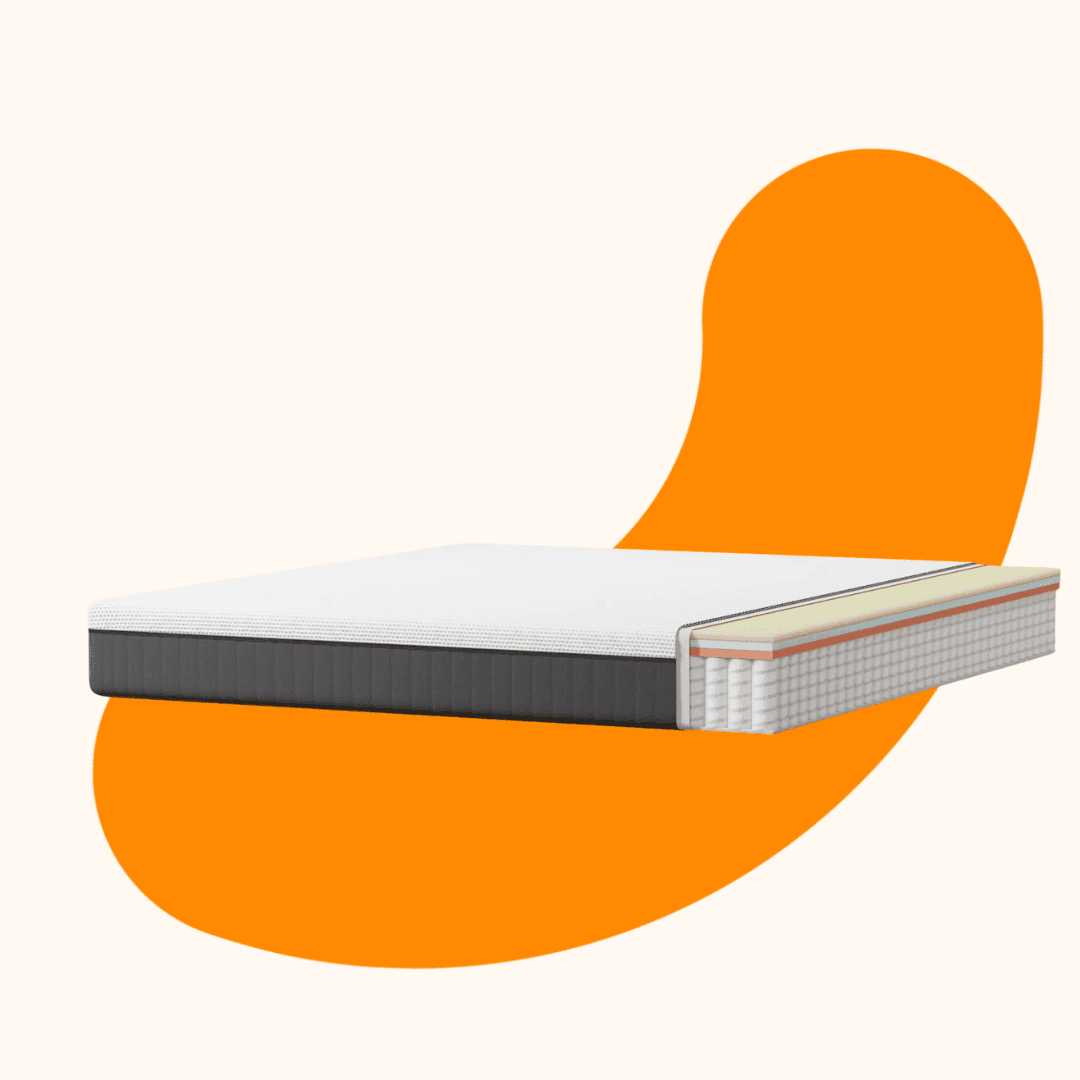
| Emma Original | Casper Original | |
|---|---|---|
| Layers | 3 | 4 |
| Top layer | Airgocell foam (breathable) | Perforated open-cell foam |
| Unique feature | Proprietary Airgocell technology | Zoned support (waffle-cut pattern) |
| Trial | 200 nights | 100 nights |
| Guarantee | 10 years | 10 years |
Feel compared#
Both feel medium. Emma has a slightly softer, more enveloping feel due to the memory foam layer. Casper's perforated top foam has less "sink", it's more consistently medium across the surface. The zoned support creates a subtle difference in feel between shoulder-area and hip-area of the mattress that some sleepers notice and appreciate.
Trial period: Emma wins clearly#
Emma's 200-night trial is double Casper's 100 nights. For a first-time online mattress buyer or anyone uncertain about fit, this difference matters. 100 nights is adequate, but 200 nights gives you a full seasonal cycle to assess the mattress.
Value#
During sales, Emma is frequently cheaper than Casper for equivalent sizes. At full RRP the pricing is comparable. Emma's longer trial period and comparable (or lower) sale pricing give it a slight overall value advantage.
Who should choose Emma?#
Side sleepers seeking maximum pressure relief; those prioritising the longest possible trial period; budget-priority buyers.
Who should choose Casper?#
Back sleepers who want zoned lumbar support; combination side/back sleepers; those who prefer a slightly firmer, more evenly responsive foam feel.
Who actually feels the zoning#
Zoned support is the real difference between these two, and it matters to some sleepers and is invisible to others. It works by varying how much the foam gives across the length of the mattress, so the shoulder can sink while the hips are held up. That only helps if your shoulder and hips need different things.
They usually do if you sleep on your side, because the shoulder is the widest point and needs to sink further than the hip. They usually do not if you sleep on your back, where the load is spread along the whole body and the lumbar gap is the only real concern. Stomach sleepers generally do worse with pronounced zoning, because a softer shoulder zone can tip the upper body down and extend the neck.
Height affects it too, and it is rarely mentioned: zones are set at fixed positions along the mattress. A sleeper much taller or shorter than average may not line up with the zones at all, which is one reason two people can try the same mattress and disagree completely about whether the zoning does anything.
Choosing when you share the bed#
Most comparisons assume one sleeper. If two of you will use it:
- Buy for the heavier sleeper's support and the lighter sleeper's comfort. Support failure is permanent; comfort can be adjusted afterwards with a topper or a different pillow.
- Size is usually the better upgrade. Going from a double to a king changes both partners' sleep more reliably than choosing between two well-made mattresses of the same size. See our UK mattress sizes guide.
- If your firmness needs genuinely conflict, no single mattress resolves it well. Two separate mattresses on a zip-and-link base is the traditional answer, and it works.
Our guide for couples goes into motion transfer and edge support in more detail, and the mattresses we score are rated separately for support and comfort so you can see where a model is strong.
Frequently asked questions#
Does zoned support help with back pain?#
It can, if your pain comes from the hips sinking further than the shoulders and pulling the lumbar spine out of line - a common pattern for side sleepers. It will not help pain caused by a mattress that is simply too soft or has lost its support, and it is not a treatment for a diagnosed spinal condition.
Which is better for a first-time online mattress buyer?#
The one with the longer trial, all else being equal, because the main risk in buying unseen is discovering the firmness is wrong for you - and that takes weeks to establish rather than days.
Can I make a mattress softer if I choose wrong?#
Softer, yes - a good topper adds meaningful cushioning. Firmer, not really: a topper cannot restore support that the mattress underneath is not providing. This asymmetry is why buying slightly firm and softening it is the safer error.
Do these mattresses need turning?#
Layered foam mattresses are single-sided and must not be flipped, but they should be rotated head to foot every few months so that body impressions do not concentrate in one spot. Our guide on rotating and flipping a mattress covers the schedule.