What is sciatica and why does it affect sleep?#
Sciatica is irritation or compression of the sciatic nerve, which runs from the lower lumbar spine (typically L4–S1) through the piriformis muscle, down the back of each leg. It causes pain, tingling, numbness or weakness that radiates from the lower back through the buttock and into the leg, sometimes as far as the foot. Common causes include a herniated disc, bone spur, piriformis syndrome or spinal stenosis.
Sleep is often the most painful time for sciatica sufferers because certain positions increase nerve compression. Lying flat (particularly on a mattress that doesn't adequately support the lumbar spine) can aggravate the condition by altering the relationship between the vertebrae and the nerve root.
How a mattress affects sciatica#
The wrong mattress can worsen sciatica by:
- Allowing the lower back to sag (too soft mattress → increased lumbar flexion → more pressure on herniated disc material)
- Creating excessive lumbar extension (too firm mattress → forces the spine to arch away from the surface)
- Concentrating pressure at the hip, which lies close to the piriformis muscle and sciatic nerve
The right mattress maintains neutral lumbar alignment, keeps the spine in its natural position and relieves pressure at the hip.
Firmness for sciatica sufferers#
Medium to medium-firm is the most widely recommended firmness for sciatica. This supports the lumbar spine without the rigidity of a very firm mattress. The specific firmness depends on your sleeping position and body weight, side sleepers may prefer medium, while back sleepers often benefit from medium-firm.
Best sleep positions for sciatica#
- Back sleeping with a pillow under the knees: Often the most comfortable position for sciatica. The pillow slightly reduces lumbar lordosis and takes some tension off the nerve root. Place the pillow in the crook of the knees rather than under the calves.
- Side sleeping on the unaffected side: If sciatica is one-sided (most common), sleeping on the unaffected side with a pillow between the knees reduces pelvic tilt and eases nerve tension.
- Avoid: Stomach sleeping (increases lumbar extension and compressive forces) and sleeping on the affected side (increased pressure on the sciatic nerve).
Best mattress types for sciatica#
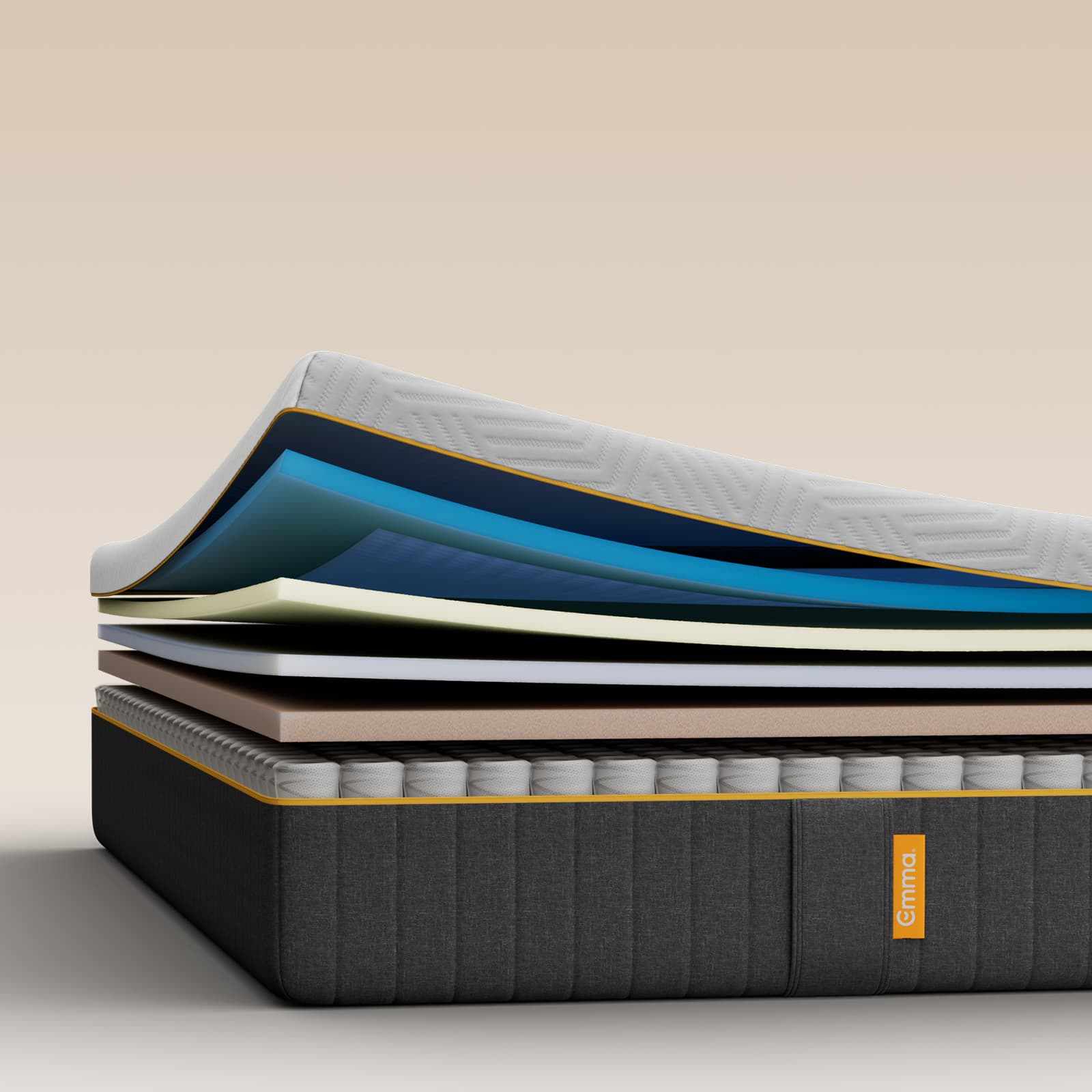
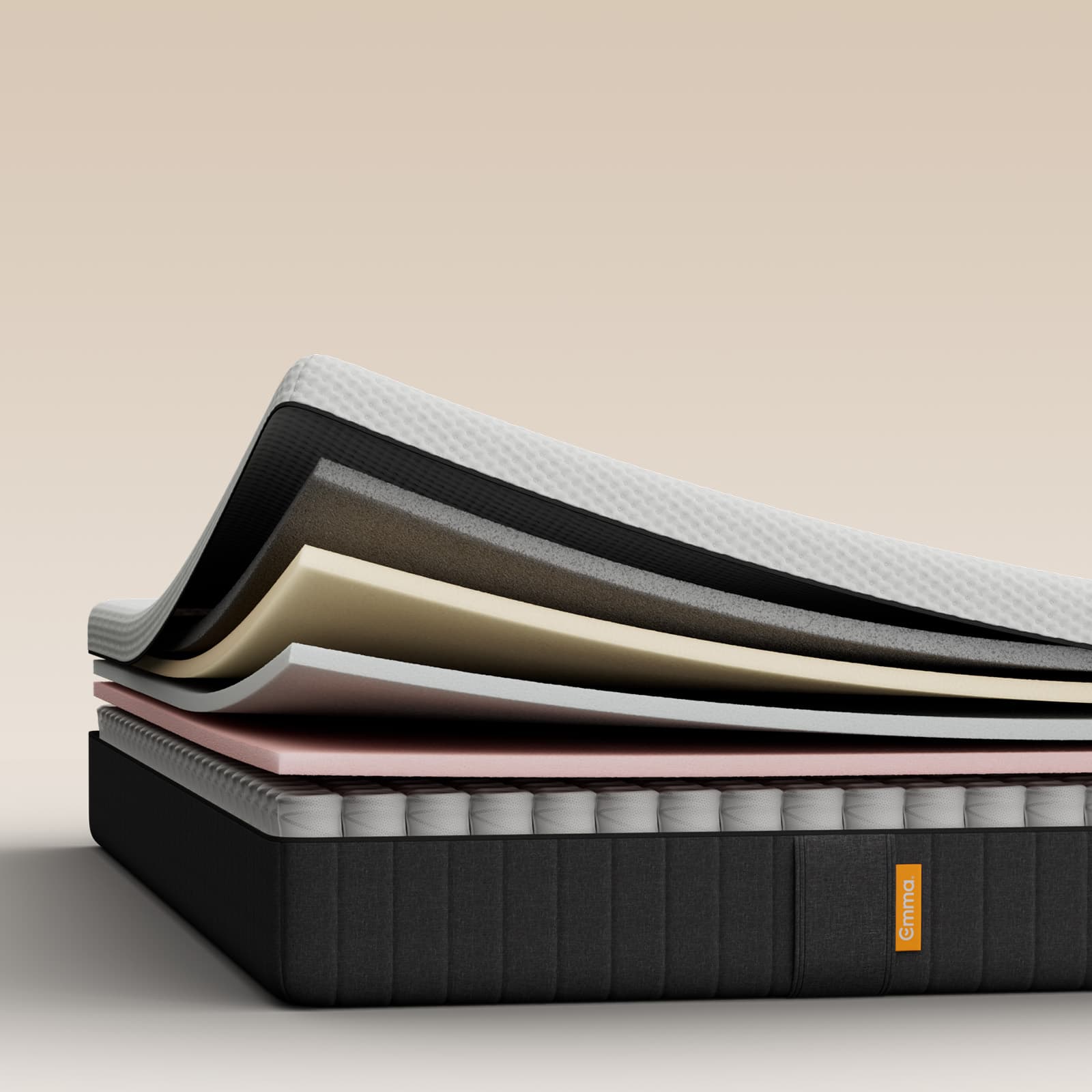
- Medium-firm hybrid: The most commonly recommended option for sciatica. The spring base maintains lumbar support; the foam comfort layer relieves pressure at the hip without allowing excessive sinkage.
- Natural latex (medium-firm): Responsive and supportive, maintains spinal alignment well. Particularly good for those who don't want the slow-sinking feel of memory foam.
- Firm memory foam: Adequate support with pressure relief. Ensure the mattress is genuinely supportive, not just soft, deep-sinking memory foam is not appropriate for sciatica.
Always consult your GP or physiotherapist for advice specific to your sciatica diagnosis and severity. A mattress change is one component of management, not a replacement for medical treatment.