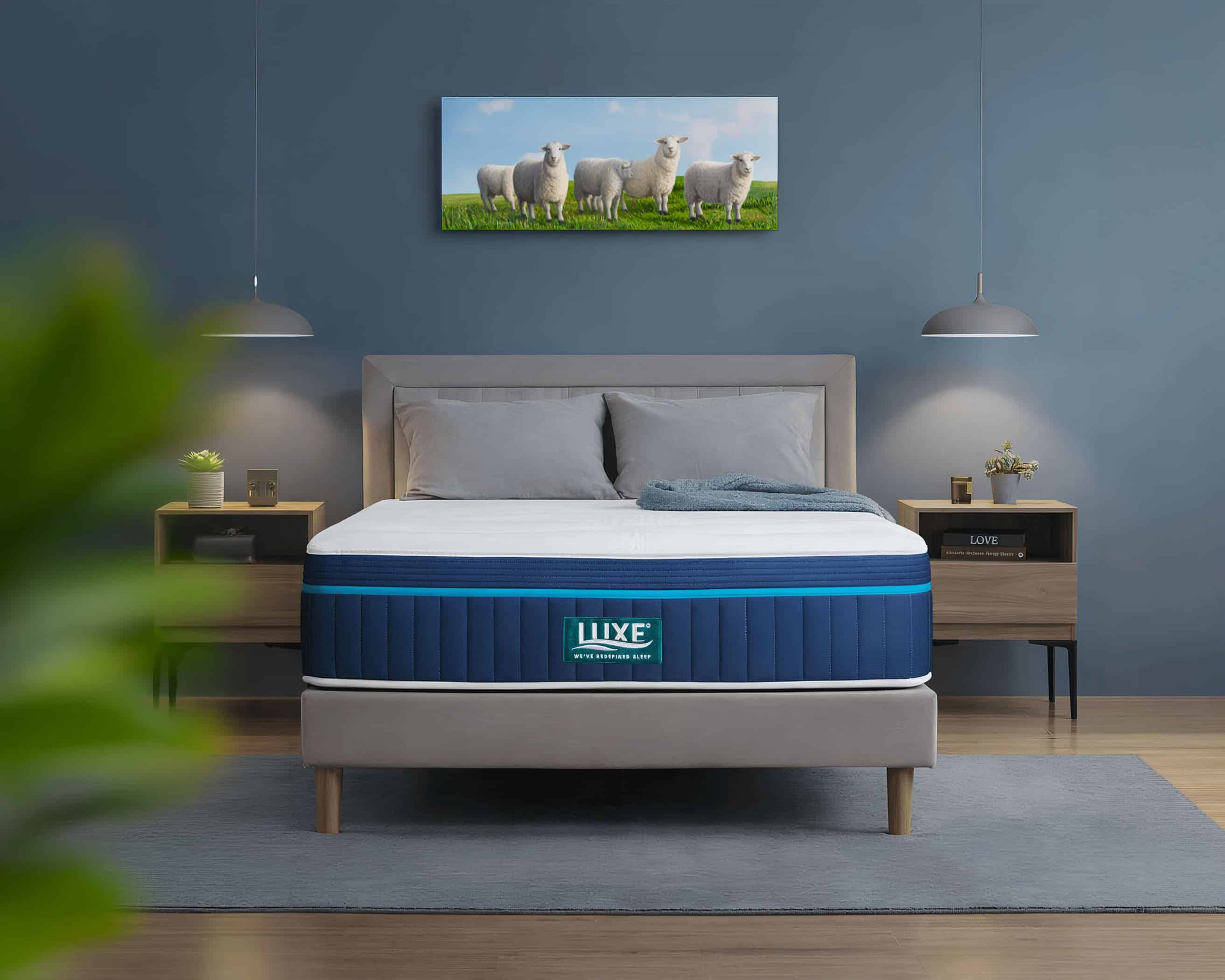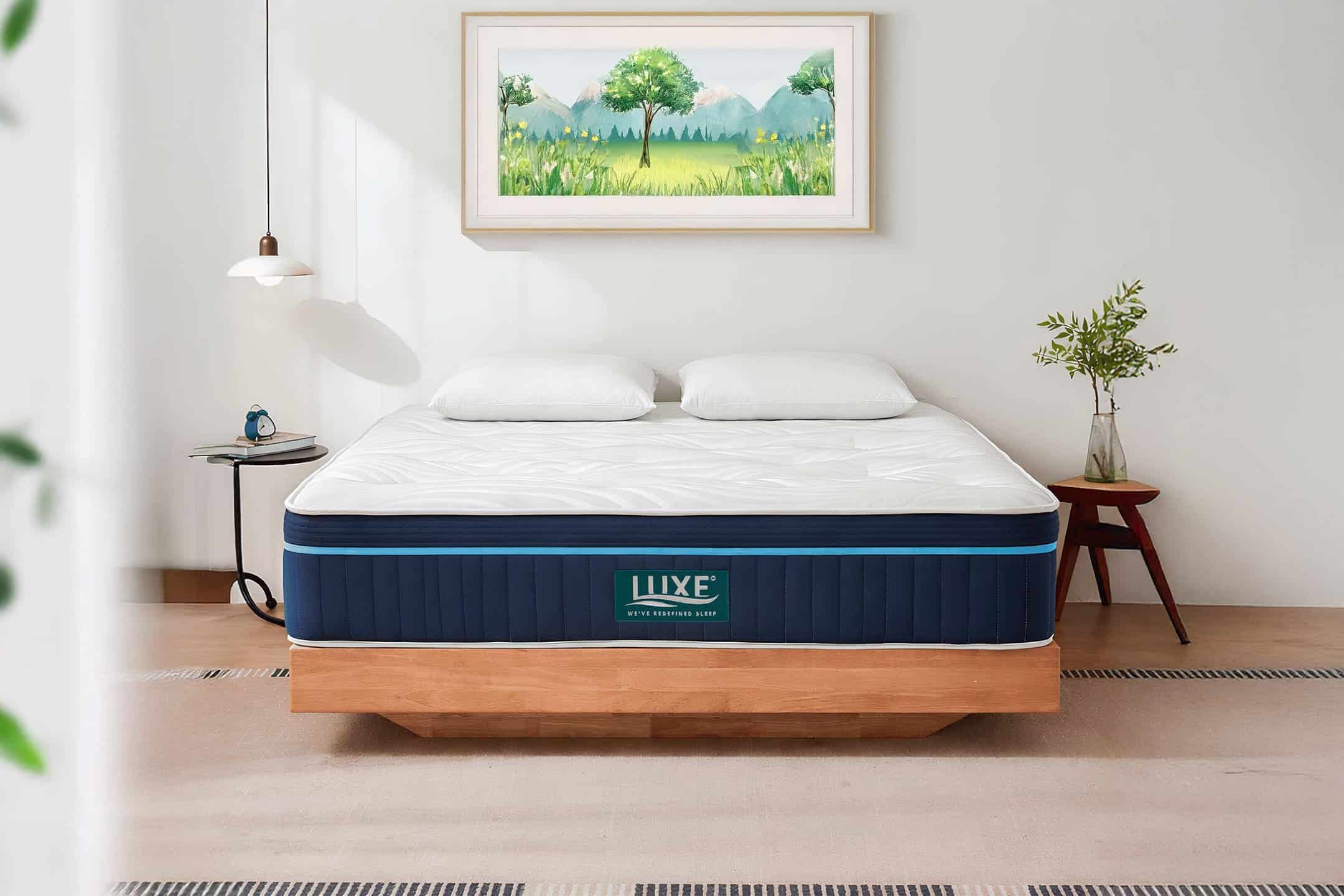
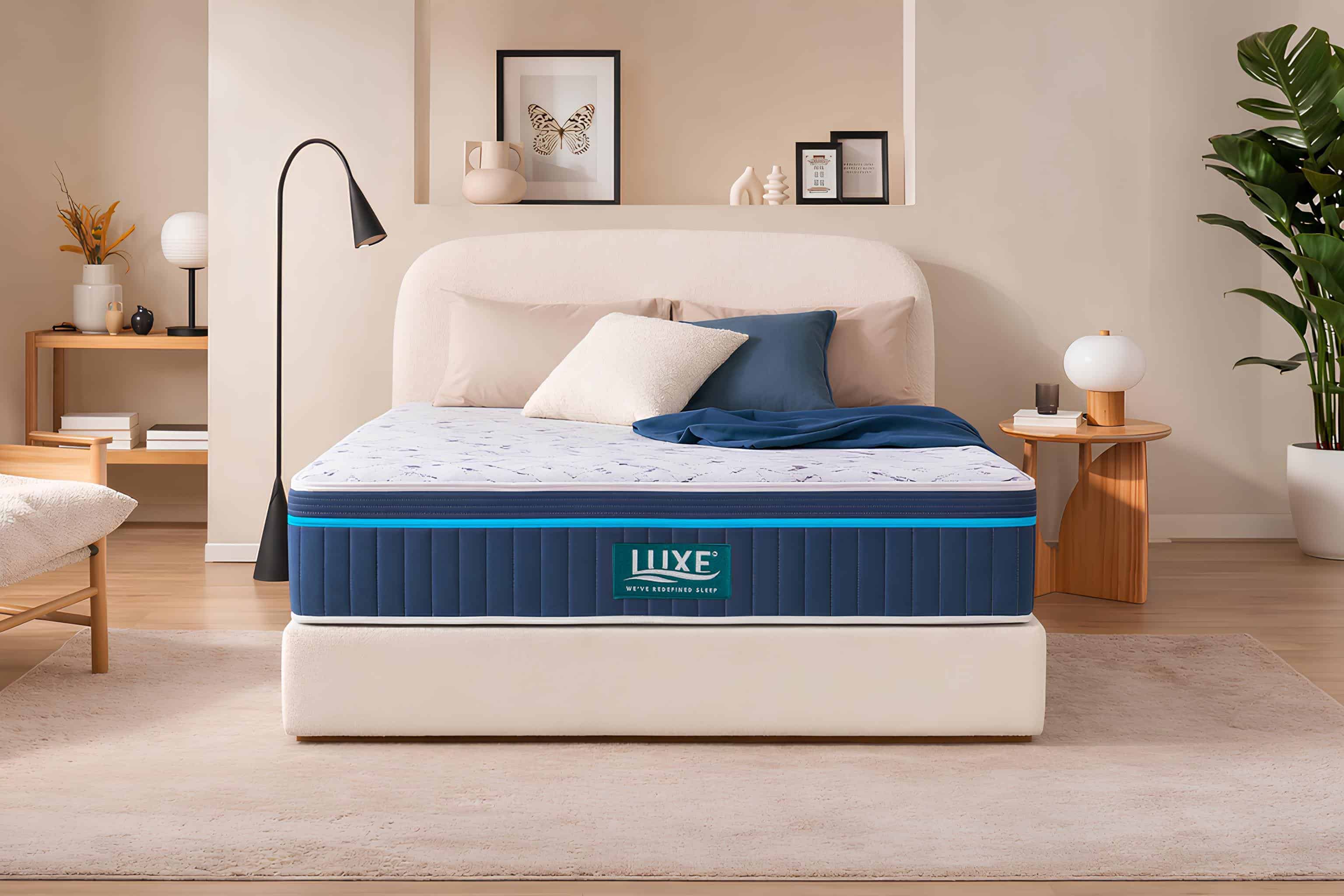
Who the LuxeTherm Hybrid suits
The LuxeTherm is the value answer to sleeping hot, and it is the mattress we point most overheating sleepers towards. It uses the same three-pronged strategy as the £1099 Emma Luxe Cooling – cooling cover, heat-managing foam, open spring layer – for roughly a third of the price.
It suits hot sleepers, warm bedrooms, menopausal night sweats and anyone who has given up on memory foam because of heat. It is not the mattress to buy if your priority is back pain or pressure relief; with 8.0 scores for both support and comfort it is a capable all-rounder, not a specialist. For back pain, see the LuxeErgo 3400.
Construction and materials
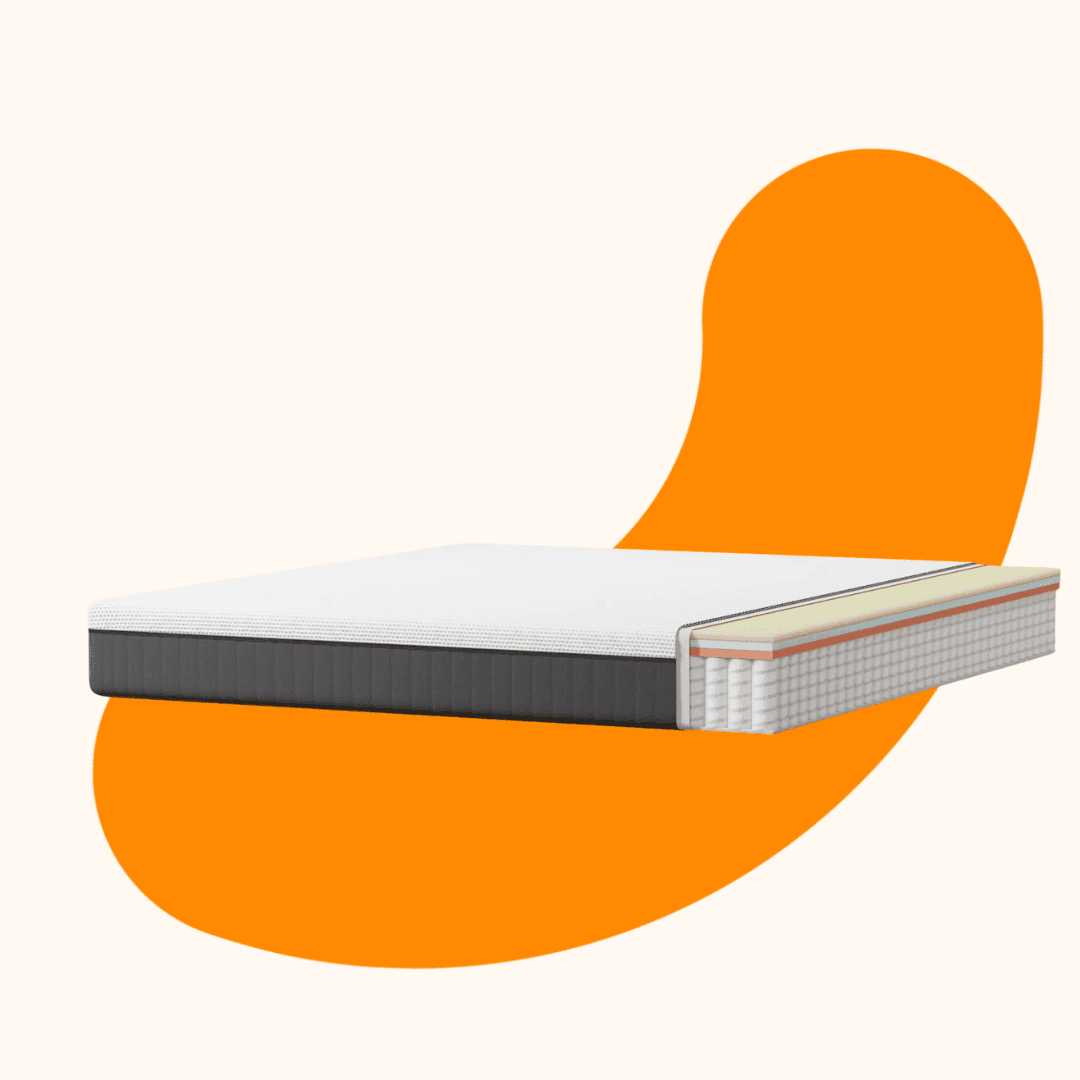
Twenty-eight centimetres: a Tencel-and-bamboo cover over phase-change LTX foam, over ventilated pocket springs. The phase-change material is the interesting part. Rather than simply insulating or wicking, a phase-change material absorbs heat by changing state – the same principle as ice absorbing energy as it melts – which lets it take heat out of the surface actively rather than passively.
Beneath it, the ventilated spring layer gives that heat somewhere to go, and the Tencel-and-bamboo cover handles moisture at the surface. Each element covers a different part of the problem, which is what a cooling mattress needs to do to work.
Comfort and support
We score it 8.0 for both support and comfort. Those are honest, middling numbers and we would rather quote them than oversell: this is a well-built medium hybrid, not a class leader on either measure.
The medium feel suits most sleeping positions. Side sleepers get reasonable shoulder relief, back sleepers get a level pelvis from the spring unit, and combination sleepers benefit from the responsiveness springs provide. Heavier sleepers over about 16 stone will want something with more support, and dedicated front sleepers will want something firmer.
Temperature
This is the whole point of the mattress and it performs. The phase-change layer handles the heat your body produces early in the night, the spring cavity ventilates it away, and the Tencel-and-bamboo cover keeps the surface dry. Against a conventional foam mattress the difference is not subtle.
One honest caveat about phase-change materials: they have a finite absorption capacity per night. Once the material has fully changed state it stops absorbing until it cools and resets. In a cool bedroom this is never reached; in a hot room in August, the benefit tails off in the early hours. Our cooling mattress guide explains what to pair it with.
Edge support and motion isolation
Edge support is good thanks to the pocket-spring perimeter – the full width of a double stays usable. Motion isolation is moderate: pocketed springs limit transfer, but this is not as quiet as an all-foam mattress. For couples where one partner is restless, the trade-off is worth weighing against how much the cooling matters.
Durability, trial and warranty
The pocket-spring core should last 9–10 years. Phase-change foams are a newer material class with less long-term field data than conventional foams, though the mechanism itself does not degrade the way a gel infusion can migrate. The 100-night trial and 10-year warranty apply. Rotate head-to-toe quarterly.
Our verdict
Our value pick for hot sleepers and one of the smartest buys on the site. An 8.8 value score reflects the reality: it delivers most of what the £1099 Emma Luxe Cooling does for around £337, because the underlying physics – move heat off the surface, give it somewhere to go – does not actually require a premium price to implement. Buy it if heat is the problem you are solving. Buy something else if it is not, because 8.0 across the board is where the rest of this mattress sits.